
I Automated One Thing. Now I Automate Everything.
I installed Home Assistant to solve one problem. Then every manual action, every graph, and every new device started looking like the next automation.
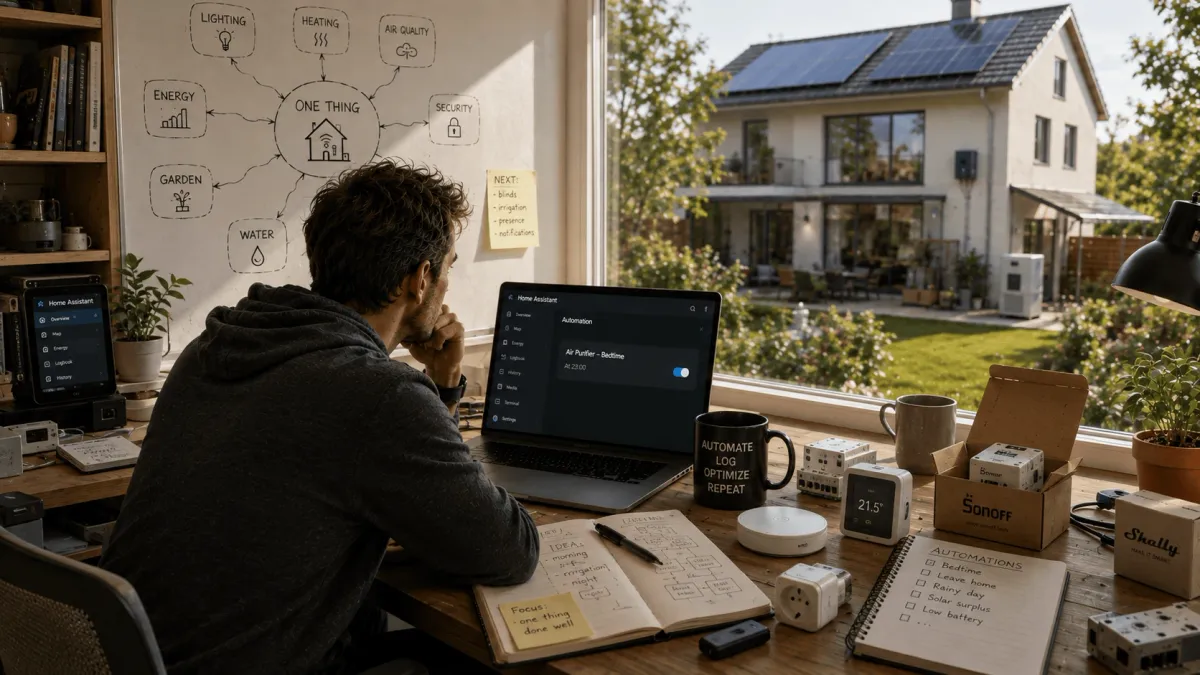
When I installed Home Assistant, I had one specific problem to solve. I solved it. That should have been the end of it.
It wasn't.
Because after the first automation, you suddenly start noticing everything that still isn't automated.
At first, it's just a dashboard with nice graphs and buttons. Fun, but still basically a toy. Then a different question appears: why am I still doing this manually?
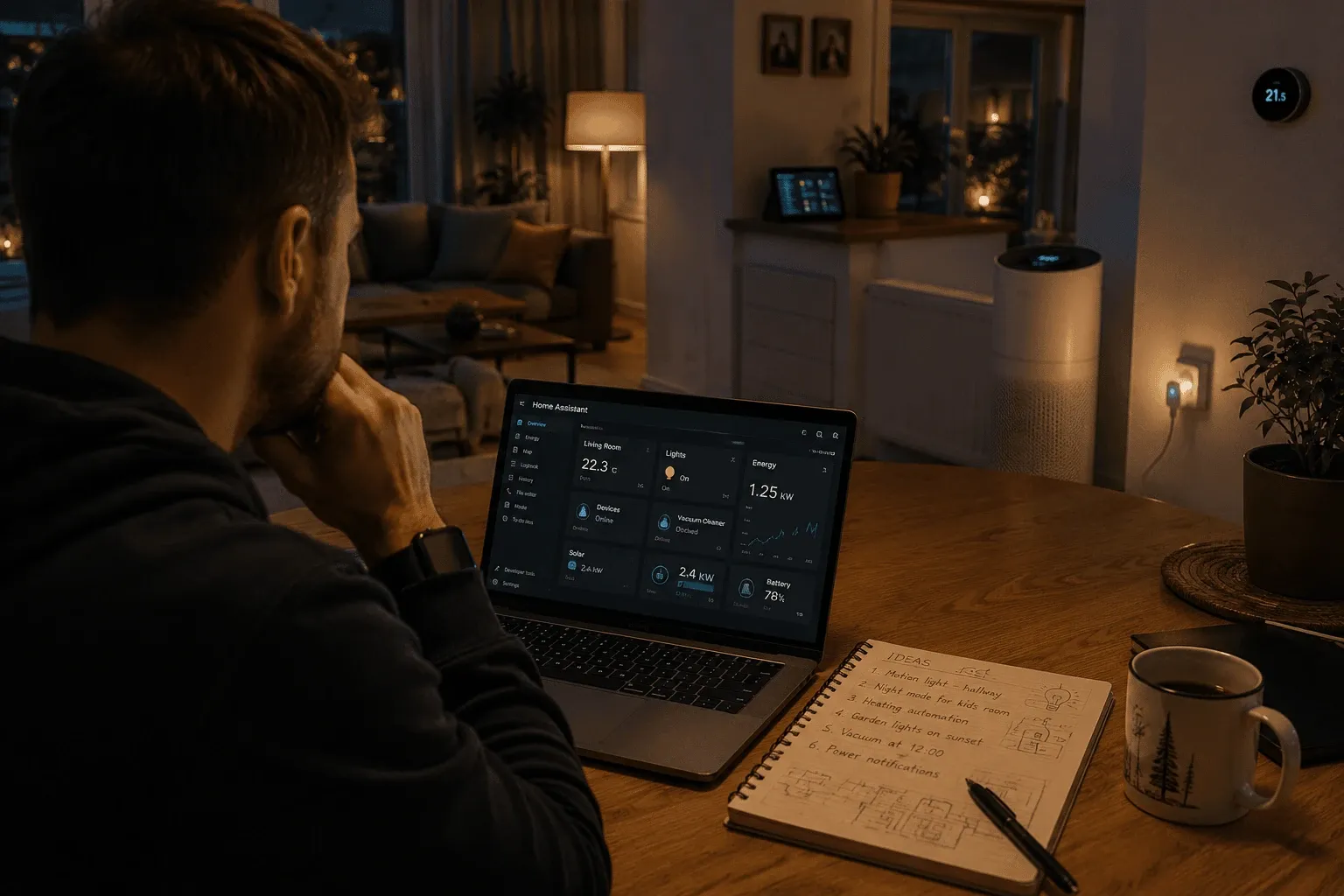
Why am I still doing this manually?
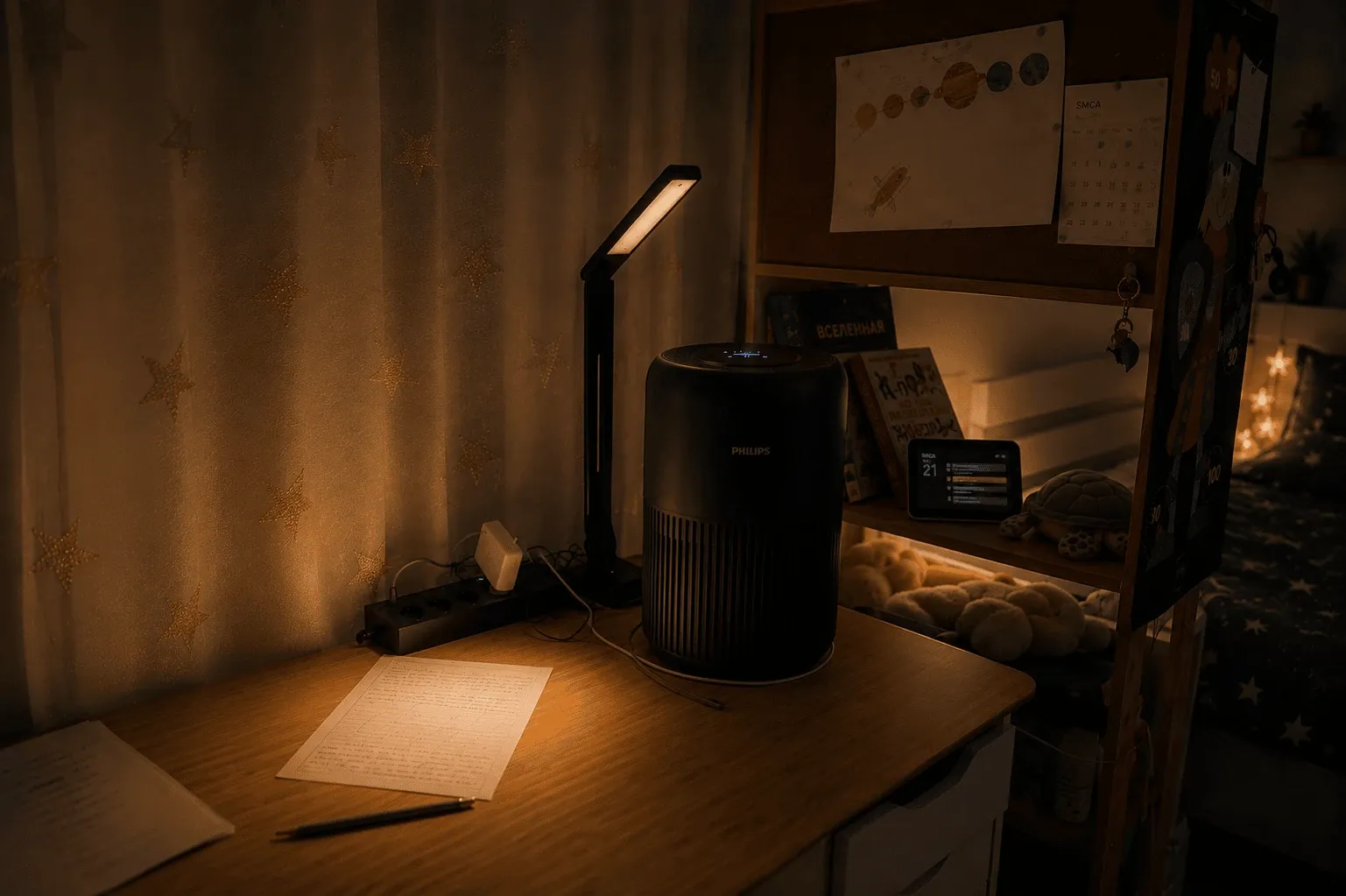
We have an air purifier in my son's room. We bought it because he has allergies. It was a completely normal purchase: I found a Philips model with a good balance of price and quality, and it did its job well.
The annoying part was that it had several modes that had to be switched manually. At night it needed to go into sleep mode so it could keep running quietly without waking him up. And, of course, sometimes we forgot. He would wake up during the night and turn it off himself.
At some point I caught myself thinking: why are we doing this by hand at all?
I started digging. It turned out the purifier had Wi-Fi, could be controlled through its own application, and, more importantly, could be integrated with Home Assistant. The control itself was almost trivial. I knew roughly when he went to bed and when he got up for school, so the modes could simply change automatically at the right times and on the right days.
The problem disappeared.
But the integration also exposed air-quality data. And that turned out to be almost as interesting as the automation itself.
If I can see it, I will want to understand it
Visualisation has always been important to me. In software projects I want graphs, metrics and observability. Grafana is one of those tools I keep coming back to because I don't just want to know that a system works. I want to see how it works.
Home Assistant brought the same habit into my house.
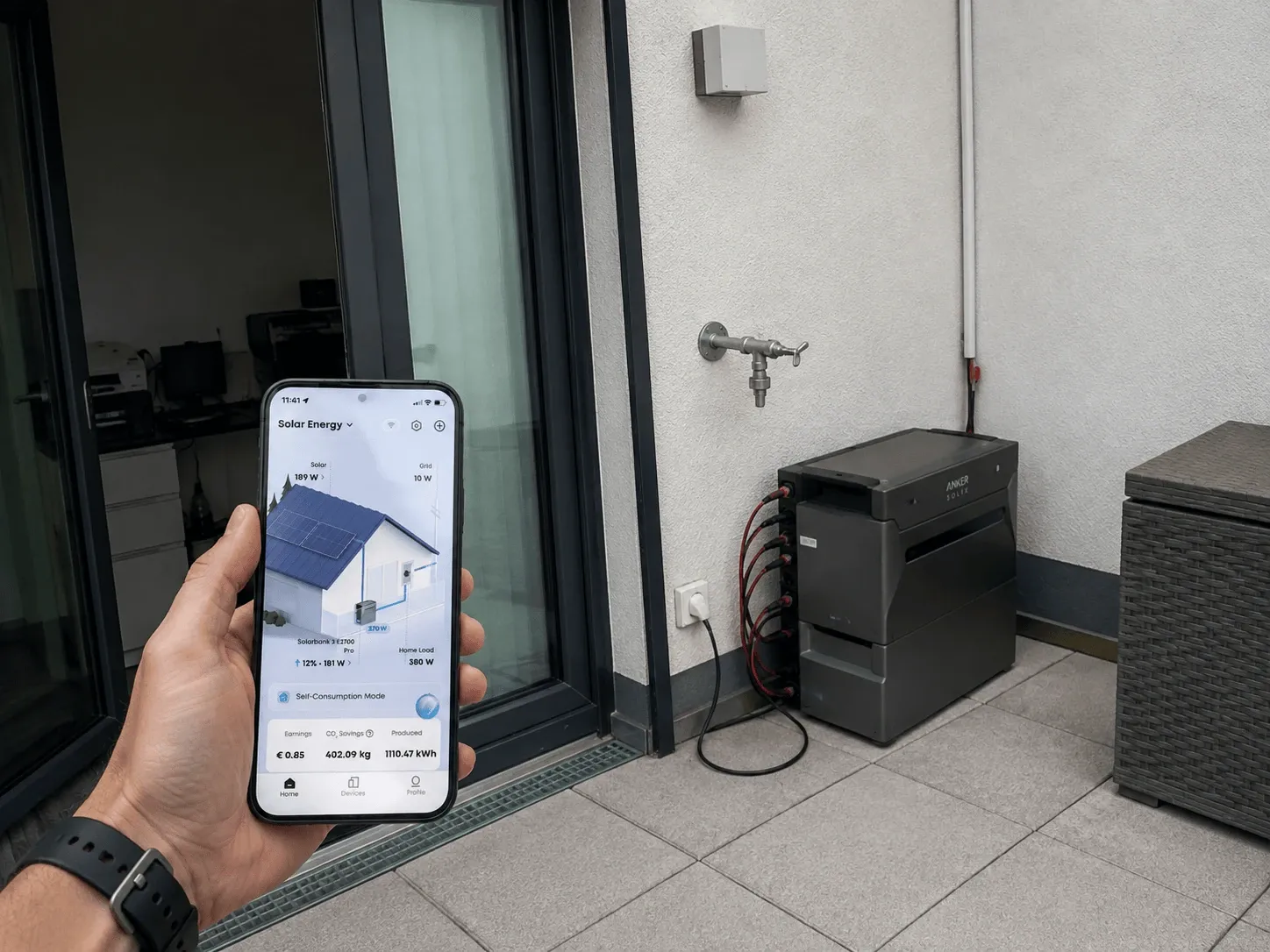
This became especially obvious after I installed solar panels and a battery. I started watching how the system behaved: how much the panels produced, how much the house consumed, how quickly the battery charged, and where the energy actually went.
During sunny summer days I noticed something very simple. The battery was filling up quickly and then spending a large part of the day sitting full. The panels could still produce more energy, but there was nowhere useful for that energy to go.
Without the data, the system looked fine. Solar panels worked. The battery charged. The house used electricity.
Once I could see the behaviour, the inefficiency became impossible to ignore.
So I added a second battery.
Then I wanted a better picture of the other side of the equation: the house itself. I installed a smart meter so I could see how much the house consumed, how much came from solar, and how much moved to or from the grid. That exposed another limitation: the existing electricity meter wasn't suitable for what I wanted to do next, so that had to be replaced too.
I hadn't planned to rethink the energy system of the house. I had just wanted to understand what was happening.
That was enough.
See. Understand. Optimize. Automate. Repeat.
At some point the loop became obvious:
See → understand → optimize → automate → see something new.
And then it starts again.
The funny part is that every improvement creates more visibility. More visibility creates more questions. And once a manual action or an inefficiency becomes visible, it becomes surprisingly difficult to keep ignoring it.
That's where Home Assistant stopped being a collection of convenient buttons for me.
It changed the way I looked at the house.
Then it changes the way you buy things
This may be the clearest sign that the shift has happened.
You stop buying devices as isolated products.
Now, whenever I look at something new for the house, one of the first questions in my head is: can I connect this to Home Assistant? How can I control it? What data can I get from it? Can it participate in the rest of the system?
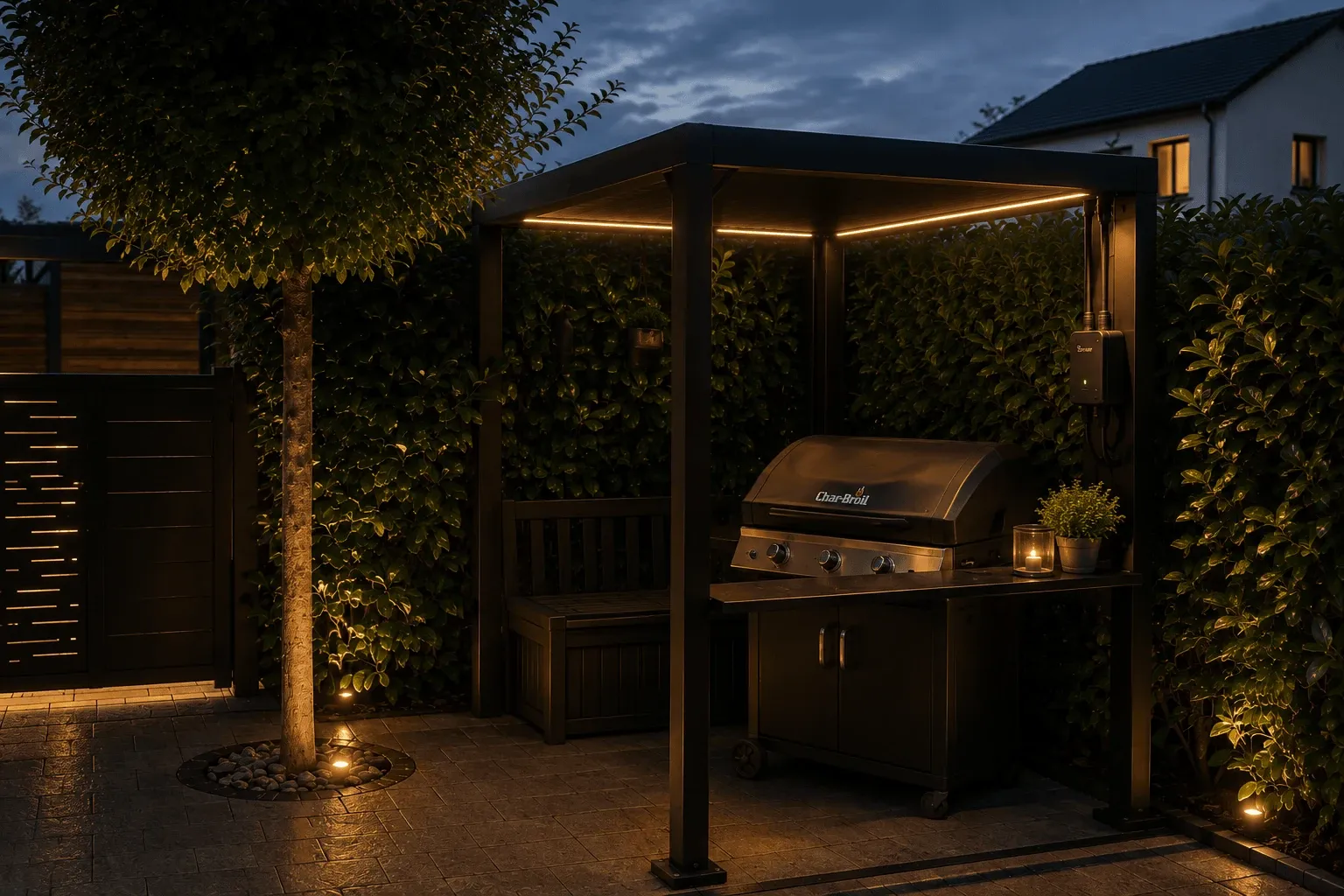
The lighting in my grill area is a good example. I wasn't looking for another smart ecosystem with another application and another cloud account. I was looking for a simple switch that could become part of the system I already had. That pushed me toward Sonoff.
And there is an important distinction here: not every device needs to be smart by itself.
Sometimes the best component is a deliberately boring one that does one thing well and can be controlled by the larger system.
The intelligence doesn't have to live in every switch.
It can live in the house.
The best interface is no interface
When I used to watch videos of people building huge Home Assistant setups, I didn't fully understand the appeal. Sure, the dashboards looked cool. Lots of cards. Buttons for every light. Sensors everywhere. Graphs for everything.
Then I built my first automation.
Then the second.
Then a custom dashboard.
And suddenly I understood exactly how people end up there.
At first you want more buttons. Then you want better dashboards. Then you start looking at the graphs. The graphs show patterns. The patterns suggest automations.
Eventually something else happens: you start removing the need for those buttons altogether.
The air purifier shouldn't require anyone to remember sleep mode. The lights shouldn't need attention when the right behaviour can be inferred. My family shouldn't need to know what state a battery, relay or sensor is in just to live in the house.
That's probably the biggest change for me.
I thought Home Assistant was about having one place where I could control everything.
Now I think the ideal smart home is one where I barely have to control anything at all.
I automated one thing.
Now I automate everything.