
My Smart Home Worked Fine. Then I Installed Home Assistant.
My smart home already worked. Then one leaking roof exposed the limits of vendor ecosystems and gave me the excuse to finally install Home Assistant. One small automation eventually became the infrastructure layer for almost everything in my house.
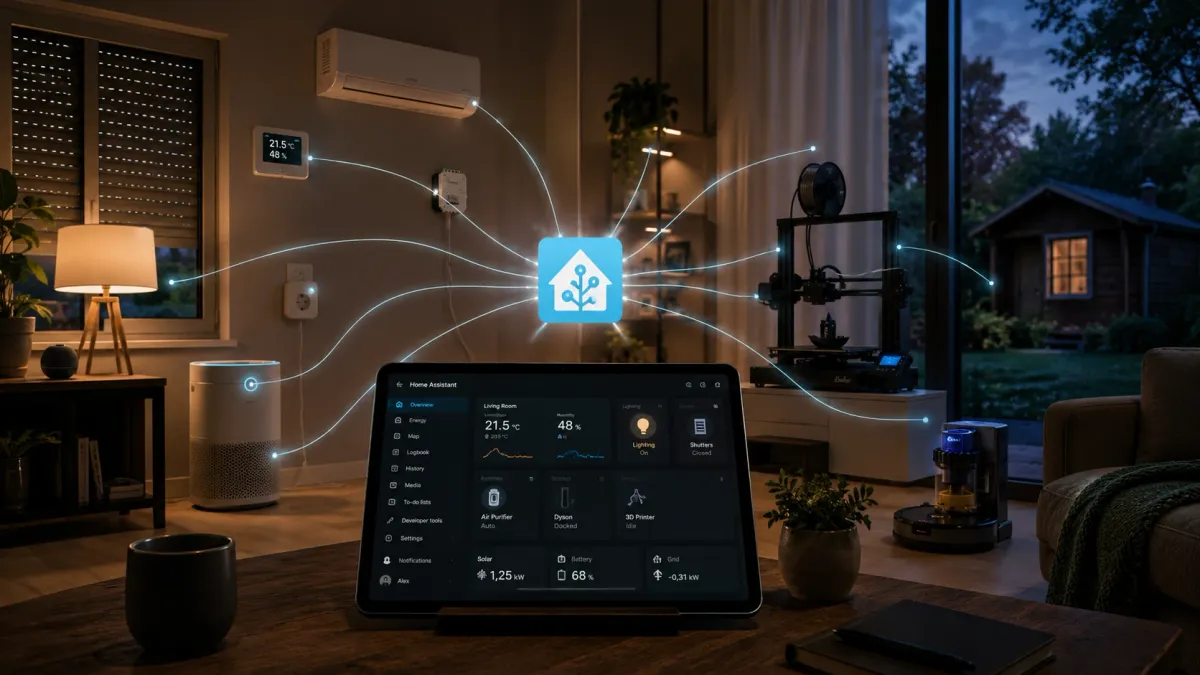
Home Assistant had been sitting on my "I should try this someday" list for quite a while. I kept seeing other people's projects, reading about automations, looking at beautiful dashboards, and thinking that eventually I'd get around to it. But there was always something more important to do.
More importantly, I didn't really need it. I already had smart plugs, cameras, sensors, relays, and various other connected devices around the house. Most manufacturers had their own apps and, surprisingly, I was completely fine with that. The plugs turned on and off, the cameras showed video, and the built-in automation features were enough for simple scenarios. Yes, I had several apps on my phone, but that wasn't a problem I felt any urgency to solve.
That changed when I needed devices from different manufacturers to work together.
It Started With a Leaking Roof
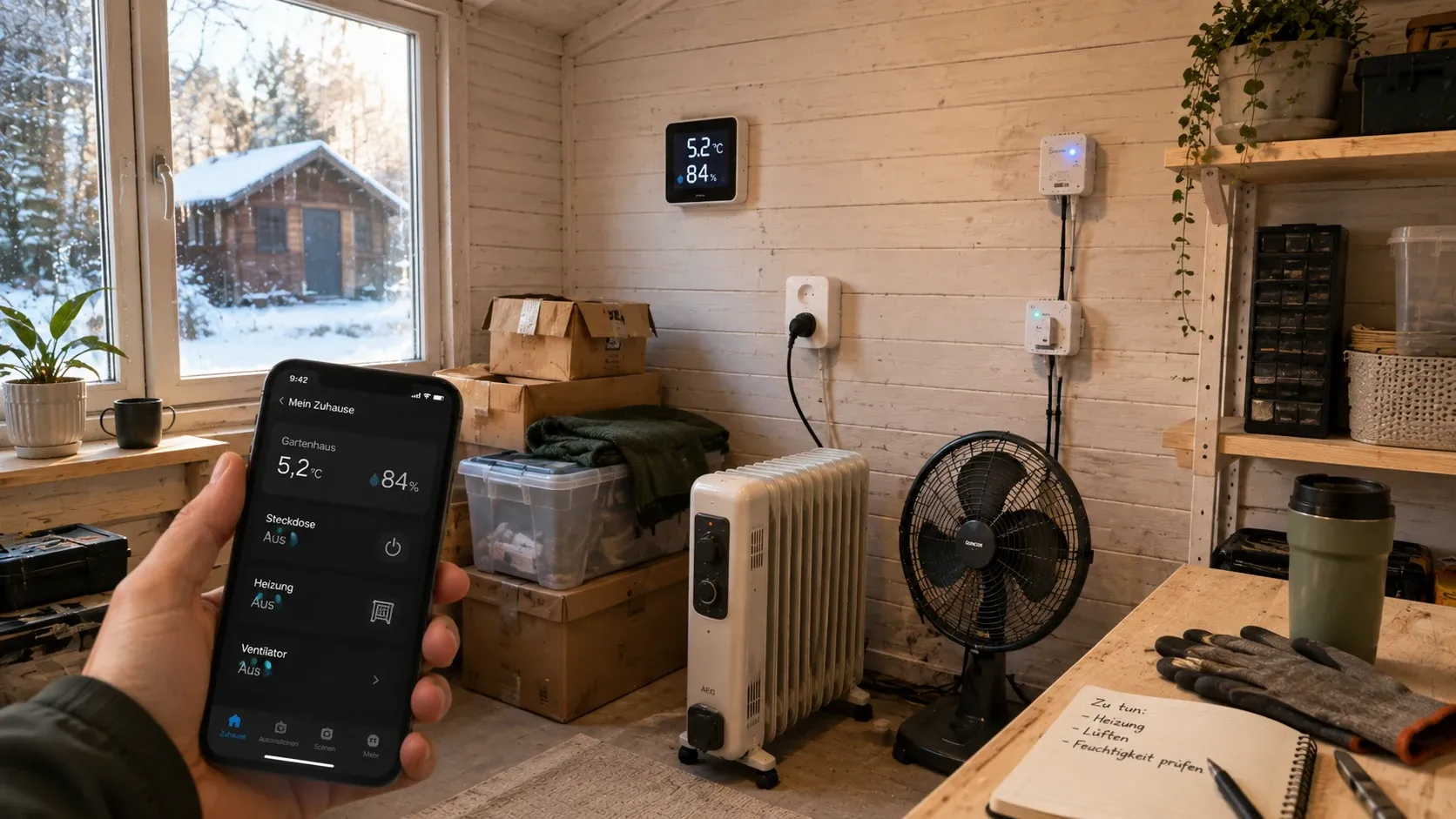
I have a small garden house, and at some point its roof started leaking. The consequences turned out to be much worse than I initially expected. Humidity inside became extremely high, and some of the things stored there were damaged. Fixing the roof solved the source of the problem, but it didn't solve the climate inside the building.
Winter made things worse. That year we had some seriously cold periods, with temperatures regularly dropping below zero. Summer created the opposite problem: on hot sunny days, the temperature inside the garden house could get uncomfortably high.
I had no interest in constantly walking out there to check the temperature, turning a heater on, remembering to turn it off later, checking humidity, and manually ventilating the place when necessary. The frustrating part was that I already owned almost everything required to automate it: a temperature and humidity sensor, a smart plug, a couple of relays, a basic electric heater, and a fan that could be used for ventilation.
Every individual component was smart. Together, they were completely stupid.
The sensor knew perfectly well when humidity was too high, but it couldn't tell a smart plug from another manufacturer about it. The plug could turn the heater on, but it had no idea what the temperature in the room was. The relay could start the ventilation, but the information it needed to make that decision lived inside a completely different ecosystem.
The logic I wanted wasn't particularly sophisticated. If it gets too cold, turn on the heater. If humidity gets too high, start drying the room. Under the right conditions, run the ventilation. Once everything returns to normal, turn it all off again.
Nothing about this sounded especially "smart." Yet building it with the devices I already owned was impossible using their manufacturers' apps.
Why Not Just Buy Everything From One Manufacturer?
That was the obvious solution. I could have bought another temperature sensor, smart plug, and relays from the same brand, installed their app, and built the entire automation inside one ecosystem. I probably could have solved the problem in an evening, and there would have been absolutely nothing wrong with doing it that way.
But I had wanted to experiment with Home Assistant for a long time. Until then, I'd never had a good enough reason to invest the time. My existing setup worked, the vendor apps did what I needed, and installing Home Assistant just so I could control the same lights through a different interface didn't feel particularly useful.
The garden house finally gave me a reason.
I also knew it wasn't going to be the last thing I'd want to automate. If I bought a complete set of devices from one manufacturer for heating today, another problem would appear tomorrow, then another one after that. Every time, I'd face the same choice: find something compatible with the ecosystem I'd already chosen, or introduce yet another isolated ecosystem into the house.
I liked a different idea much more. Instead of making all my devices the same, I wanted their differences to stop mattering.
The Evening I Finally Installed Home Assistant
So Home Assistant finally stopped being something on my "someday" list. I installed it, added the sensor, connected the smart plug, and brought in the relays. Then something very simple, but surprisingly important, happened.
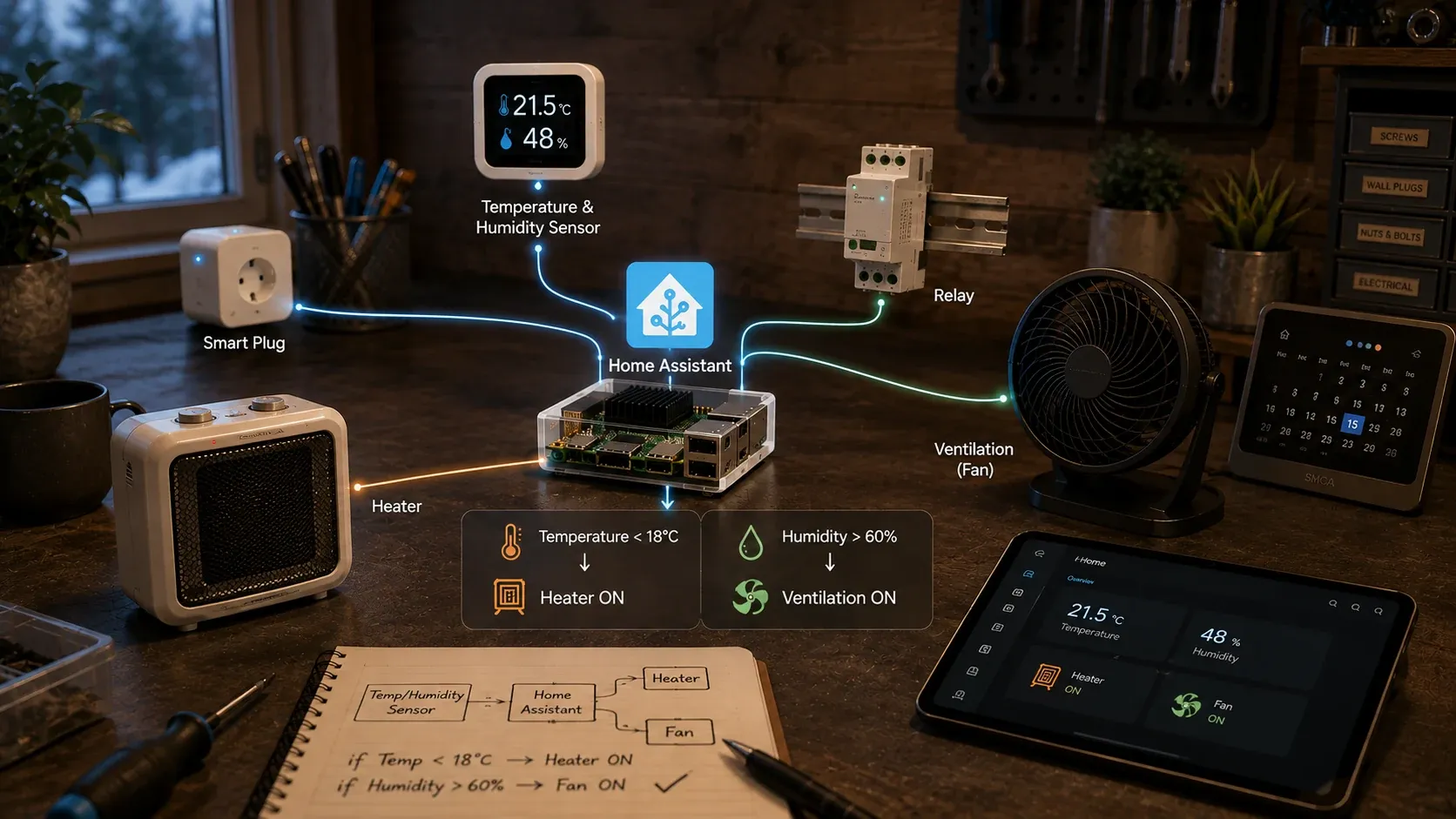
From Home Assistant's perspective, there was no longer a sensor from one manufacturer and a plug from another. There was a temperature value. There was a humidity value. There was a switch controlling the heater and another switch controlling the ventilation. That was it.
The manufacturers suddenly became irrelevant.
Now I could say: if the temperature falls below a certain point, turn on the heater. Once the room is warm enough, turn it off. If humidity gets too high, react to that instead. If the room needs ventilation, start the fan. What had previously existed inside several completely independent applications had become one system.
That was the moment Home Assistant really clicked for me. It wasn't the dashboard, the ability to turn a light on from my phone, or even the huge list of supported integrations. It was the realization that I could finally describe what I wanted my house to do, instead of choosing from whatever scenarios the manufacturer of a particular device had decided to support.
Then Came the Chain Reaction
Once the first automation was working, an obvious question appeared: if Home Assistant can do this, why stop at the garden house?
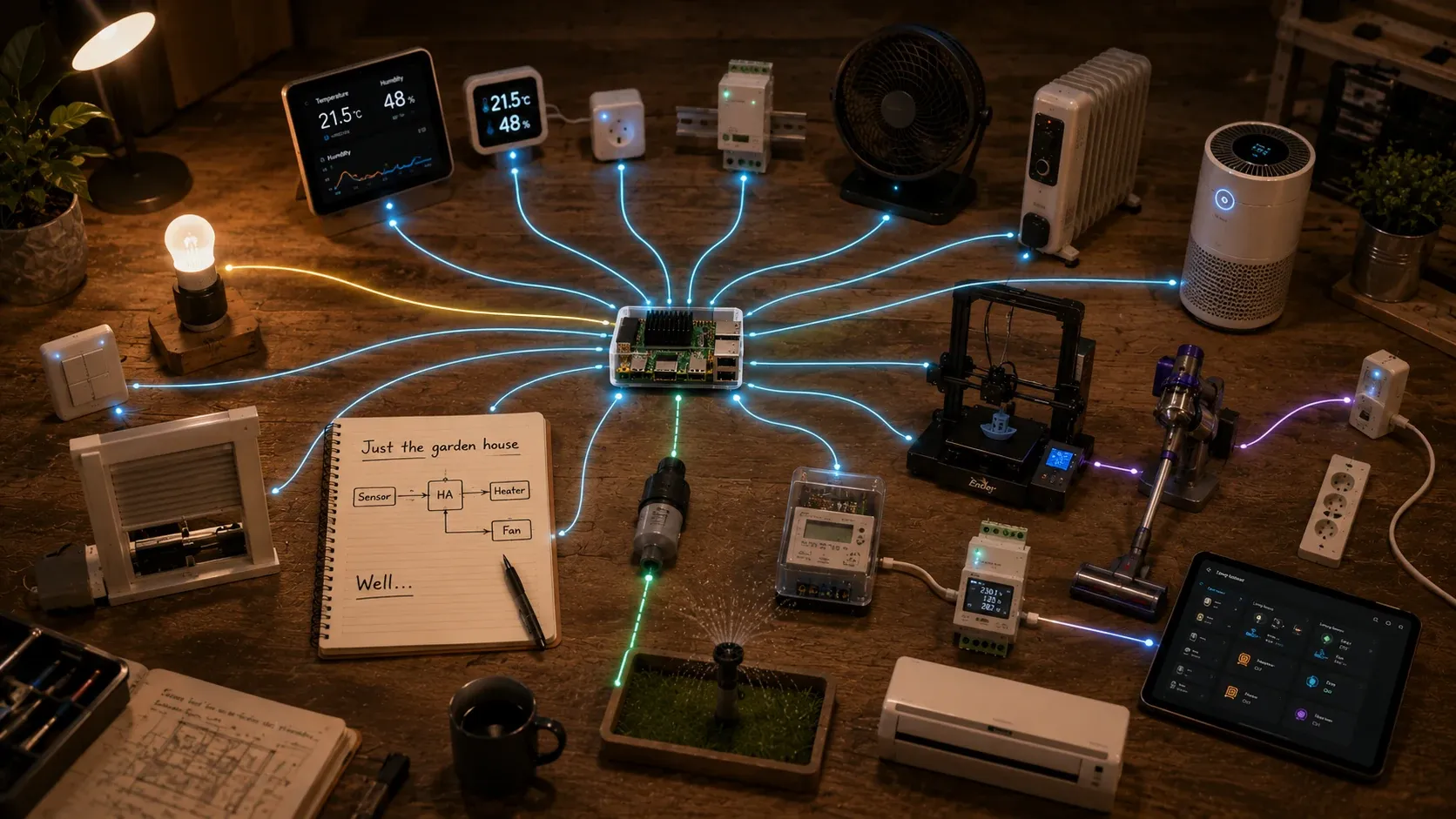
More devices started appearing, followed by more integrations and, inevitably, more ideas. Lights stopped being lights controlled by their own apps. My Somfy roller shutters became part of the same system. So did the air purifiers, Sonoff plugs and relays, energy monitoring, the solar system and smart meter, and eventually even my 3D printer.
At some point, my Dyson ended up in an automation too. Once it is fully charged, its power can be switched off and later restored automatically so the dock is ready again when needed. Air conditioners are likely to be next, along with several other systems around the house.
The funny thing is that most of these devices have almost nothing in common from their manufacturers' perspective. That's exactly why they work so well together in mine.
At Some Point, Home Assistant Stopped Being an App
Initially, I thought of Home Assistant as another automation tool, just a much more flexible one. Over time, that perception changed. Today, I think of it much more as an infrastructure layer for the house.
Underneath it are physical devices, different protocols, Zigbee, Wi-Fi, Matter, cloud APIs, and local integrations. There are products from manufacturers that never expected their devices to work together at all. Above all of that sits one layer that doesn't particularly care where the information came from.
A temperature is still a temperature. A roller shutter is still a roller shutter. A relay is still a relay. A light is still a light. Home Assistant provides the layer where all of those things can finally interact.
It ended up looking surprisingly similar to the systems we constantly build in software engineering. Individual components don't necessarily need to know anything about each other. What matters is having a layer that can observe their state, make decisions, and control them.
I never planned to apply software architecture principles to my house. It just happened.
It Even Changed How I Buy Things
This might be the most noticeable consequence of the whole experiment. Before Home Assistant, the manufacturer was one of the most important considerations when buying a smart device. Which app does it use? Do I already own products from that brand? Can I build the automation I need inside its ecosystem?
Today, I ask a completely different set of questions. Does it integrate properly with Home Assistant? Can I control it locally? Which protocol does it use? Can I read its state? What happens if the manufacturer's cloud disappears? Can I use it in automations with everything else I already own?
As a result, I've stopped trying to build a house from products made by a single company. I can choose whatever component makes the most sense for each particular job. The roller shutters can be Somfy, the relays Sonoff, the air purifier Philips, and the printer can live in an entirely different universe. The next air conditioner might come from yet another manufacturer.
It doesn't really matter anymore, because I'm no longer buying another ecosystem. I'm buying another component for mine.
Automation Stopped Being a Toy
It's easy to treat early smart-home devices as toys. You can turn a light on from your phone, check the temperature without getting off the couch, or ask a voice assistant to close a roller shutter. It's fun, but none of it fundamentally changes how the house works.
The real value of automation appeared when I started not noticing it anymore.
I don't need to remember that a room has become too cold. I don't need to constantly think about whether some device should still be charging. I don't need to open five applications to understand what's happening around the house. The system knows the state of physical devices and can react without waiting for me.
The more of these small decisions I automate, the less attention the house requires from me. That's probably become my main criterion for good home automation: if I have to constantly interact with it, maybe it isn't automated enough yet.
It All Started With One Sensor
It's funny to look at my Home Assistant setup today and remember why I installed it in the first place. I didn't need a smart home, I wasn't trying to build a huge dashboard, and I definitely wasn't planning to create an automation platform for my house.
My roof had leaked.
The garden house became too humid, a few smart devices from different manufacturers couldn't talk to each other, and I wanted to stop manually watching temperature and humidity. Home Assistant solved that problem, and then I discovered that the exact same idea worked for almost everything else in the house.
Today, when a new device or system appears, I rarely think about which app I'm going to have to install. I think about how it will become part of the system I already have.
A few years ago, the question was simple:
How do I make this heater react to this humidity sensor?
Today, it's a very different question:
What am I still doing manually that my house could already be doing for me?