
The Feeling of Pressing Play
I don't need another music player. I want to know why pressing a real button can still feel different from tapping a screen, and what I might learn by trying to build one anyway.
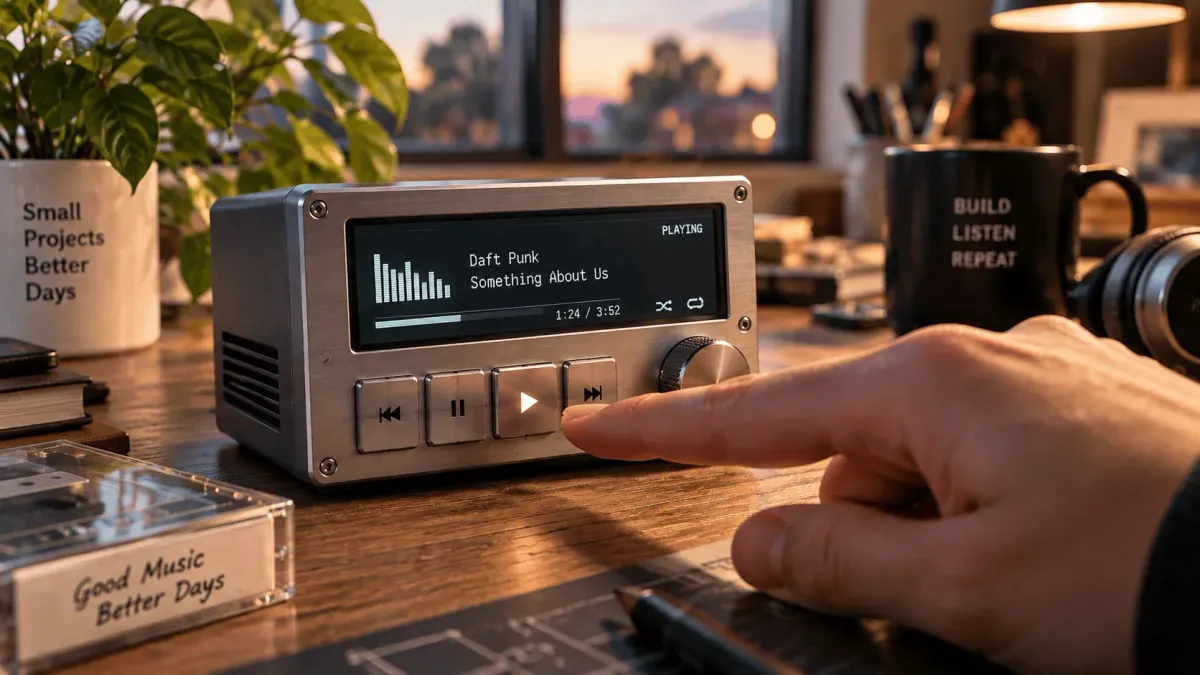
At some point, I wanted to build Winamp. Not run an old version on a modern computer. Not install another skin. I wanted to make it physical.
A small box with a screen. Buttons. A volume knob. A real Play button. And that immediately raises a perfectly reasonable question: why?
I don't need another music player. I have a phone, Spotify, and access to almost any music within seconds. From an engineering perspective, this problem was solved a long time ago. And, frankly, solved much better than I could ever solve it myself.
At first, I thought it was simply nostalgia. Winamp reminds me of a time when music lived on a hard drive, playlists were assembled by hand, and skins could change almost every week. But the more I think about it, the less I believe this is really about Winamp.
Maybe what I miss is the feeling of interacting with technology itself.
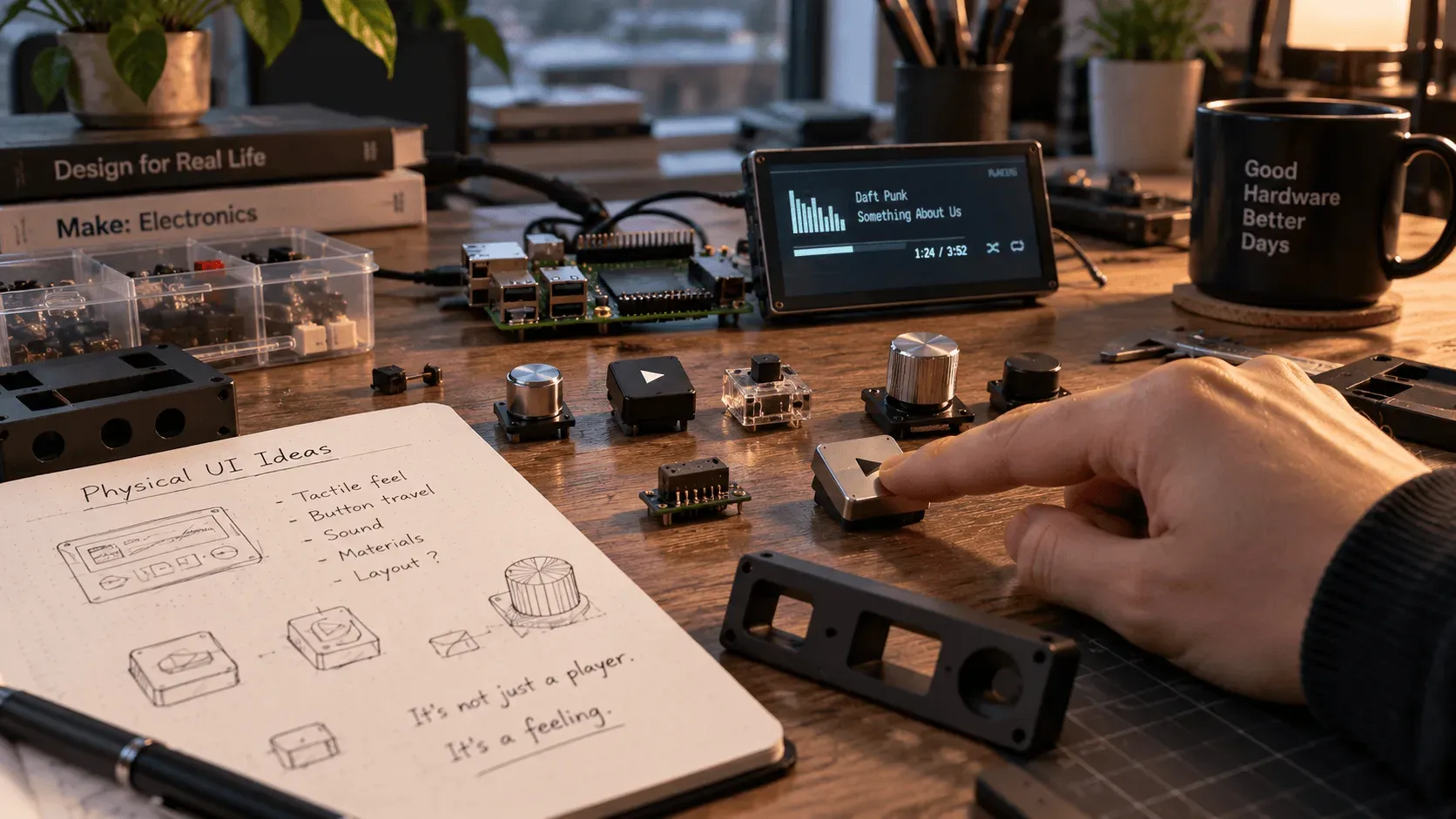
Different actions used to have their own physical language. Something had to be pressed. Something had to be turned. Something had to be plugged in. A button had travel. A switch had a click. You weren't just giving a device a command. You were physically doing something.
Today, an enormous number of completely different actions feel exactly the same. Glass. Tap. Swipe. Another tap. And it happened.
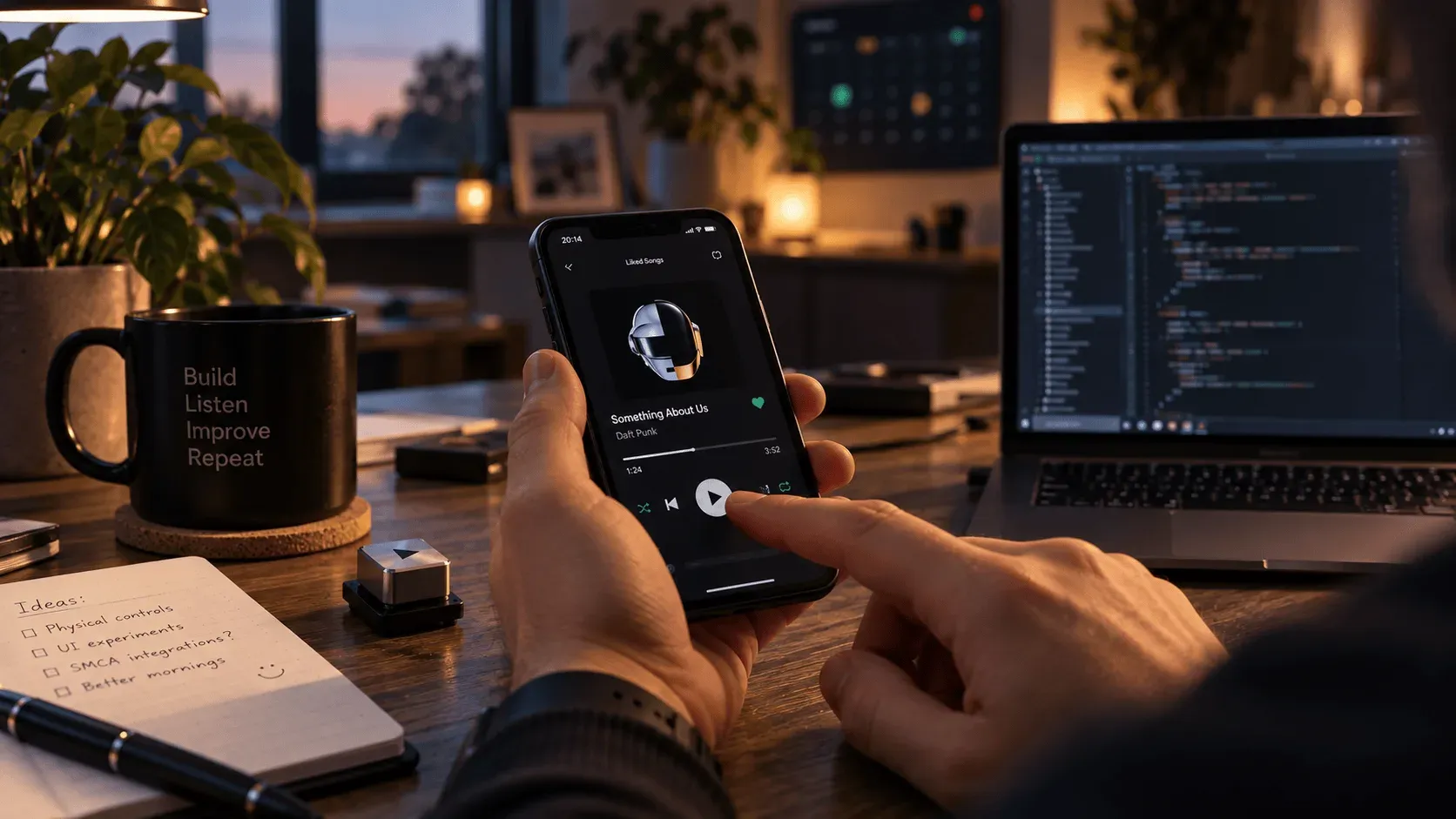
That doesn't mean things were better before. Quite the opposite. Modern interfaces are faster, more convenient, and often much easier to understand. I'm an engineer myself, and I constantly build systems specifically to remove unnecessary steps, automate routine work, and make interactions simpler.
But somewhere along the way, a small feeling disappeared: I did something. Not in the sense of productivity. Not in the sense of the result. Just the physical feeling of interacting with a thing.
That's probably why I like the idea of a physical Winamp. And I don't even know what it should be yet.
I can try different buttons. Encoders. Magnetic connectors. Experiment with sound, materials, the screen, the enclosure. Build something, realize it doesn't work at all, take it apart, and try again.
And maybe that's the most interesting part of the project for me right now. It doesn't have to become a product. It doesn't even have to be finished.
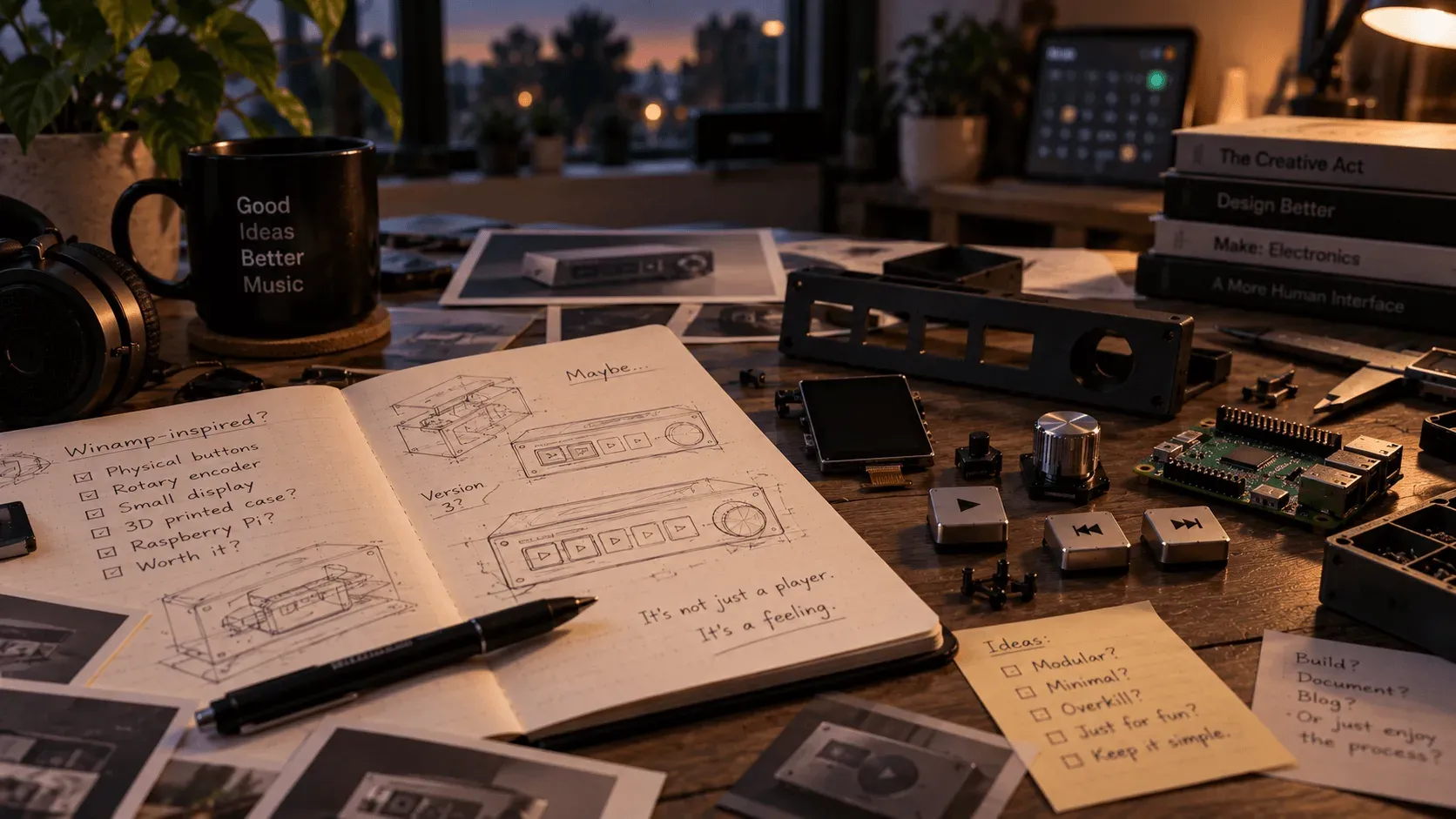
It can simply be a small DIY sandbox where I get to try technologies and materials I don't normally work with. Learn something new not because my job requires it or because the next project needs it, but simply because I'm curious.
Maybe I'll eventually build a small physical Winamp and put it on my desk. Maybe a few weeks from now it will still be lying there in pieces next to a Raspberry Pi, some wires, and a pile of failed parts. And that's fine too.
I'm not trying to bring the past back. I'm just curious whether I can bring back one small feeling from it:
the feeling that you're actually interacting with a thing. And where that leads, I don't know yet.