
My Career Did Exactly What I Needed. Then I Needed Something Else
Programming gave me work I loved, financial stability and a path to a new life. Then I had to learn that progress could exist outside a career.
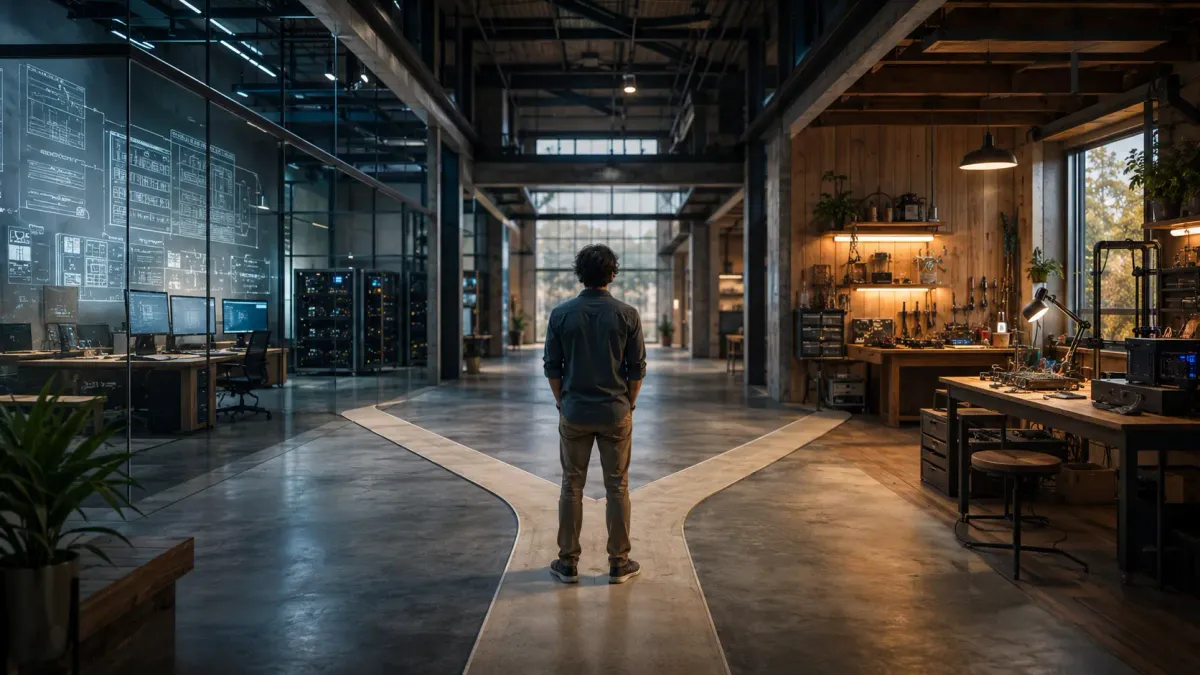
I cannot say that I chose the wrong profession.
Programming gave me almost everything I wanted from it: interesting work, good money, the chance to move to another country, difficult problems and the feeling that I was genuinely good at something. I enjoyed my work for many years and eventually became a Senior software engineer with a substantial body of knowledge and experience.
The problem was something else.
At some point, my career completed the job I had built it to do. But I continued treating it as if the next professional step should still answer the question of where I needed to go next.
There was no answer.
A Choice That Was Barely a Choice
I studied systems engineering. In my case, that meant designing electronics and programming them. I was never interested in code alone. I liked building the whole system: understanding how its parts interacted, finding connections and turning an idea into something that worked.
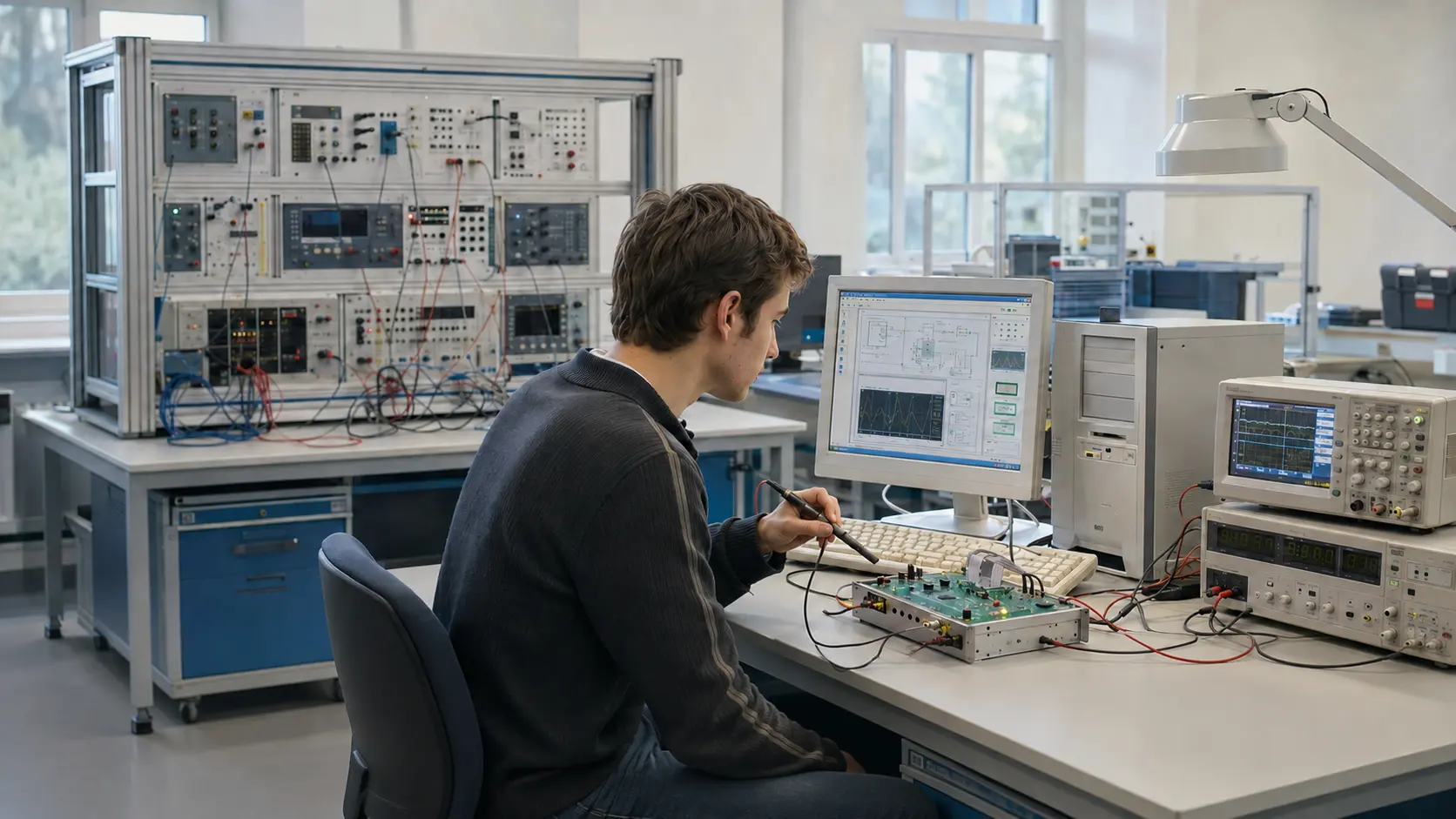
My university thesis was exactly that kind of project. I built a device intended to replace the large test benches used at the university. Instead of working with bulky equipment, students could use a smaller, more convenient device connected to a software suite.
That project contained everything I loved about engineering: electronics, programming, design and a clear practical problem.
Then university ended.
In 2007, I had two realistic paths in front of me. I could join an engineering design bureau and work in the field I had studied for very little money. Or I could move into software development, where the market was growing quickly and offered far more opportunity from the beginning.
I chose software.
It would be easy to describe that decision as abandoning a dream for money. Real life is usually more complicated. Money did not represent comfort alone. It meant independence and the possibility of eventually leaving Ukraine. That idea had been with me since university, and my choice of profession was part of a much longer plan.
I did not leave electronics because I had stopped loving it. I left because I could not see how to build the future I wanted around it.
Sometimes I regret that choice. But I still cannot call it a mistake.
Programming Turned Out to Be My Kind of Work
This story would be simpler if I disliked programming. Then it could be reduced to an obvious lesson: I chose money, lost my calling and decided to return years later.
But that is not my story.
I genuinely enjoy programming, especially problems where knowing a language or framework is not enough. I like understanding complex systems, seeing dependencies, looking for causes where they are not obvious and assembling a solution from many different parts.
Critical thinking has always been one of my strengths. Sometimes I see connections that only become clear to other people after I point them out. Many things come to me almost intuitively, although that intuition is, of course, built on years of practice, mistakes and accumulated experience.
All of this turned out to be useful in software. I grew, solved increasingly difficult problems and sincerely enjoyed the work for a long time.
But there were periods when my interest disappeared. I became tired and started wondering whether I had chosen the wrong profession. Looking back, I think the problem was not programming itself as much as the feeling of standing still. When I could not see progress, it felt as if I were not merely staying in place but actively becoming worse.
At the time, I did not separate professional growth from personal development. If work stopped moving me forward, I treated it almost like a personal malfunction.
Several times, I seriously considered changing professions. But I stayed, found a new problem, a new level of complexity or a new goal. Movement returned, and interest returned with it.
That is how I reached Senior level.
A Career as a Vehicle
For many years, my career had a very specific job. It was supposed to help me leave.
I spent most of my conscious life in Ukraine. It was where I met my beloved wife and where our daughter was born. Even so, the desire to experience life in another country had been with me since university.
The UK was my main plan. I worked systematically toward the point where I would be able to apply for a suitable visa. By the time I was ready, that route had been closed. The remaining options felt more like bondage: too much dependence and too few rights.
I looked at the United States and Germany, although Germany happened almost by accident. Eventually, I received an offer, my wife supported me, and we moved.
The move was not a finish line. It was another beginning.
Professionally, I had to prove a great deal again. My experience had not disappeared, but in a new country, a new company and a new system, people still had to see it. In a sense, I found myself back at the start.
At the same time, growing was easier precisely because of the experience I already had. I could see where the system was slow, where processes existed for their own sake and where corners could be cut without sacrificing the result. I already knew which problems were genuinely difficult and which merely looked difficult because of poor organization.
Gradually, stability arrived.
The plan that had begun many years earlier had worked. My profession gave me mobility, financial support and the opportunity to build a life in another country.
This was probably the moment when I first encountered a problem I could not formulate for a long time: what do you do with a career after it has completed its main job?
The Price of Another Path
At one point, I seriously considered returning to robotics and studying it at a university in Hamburg.
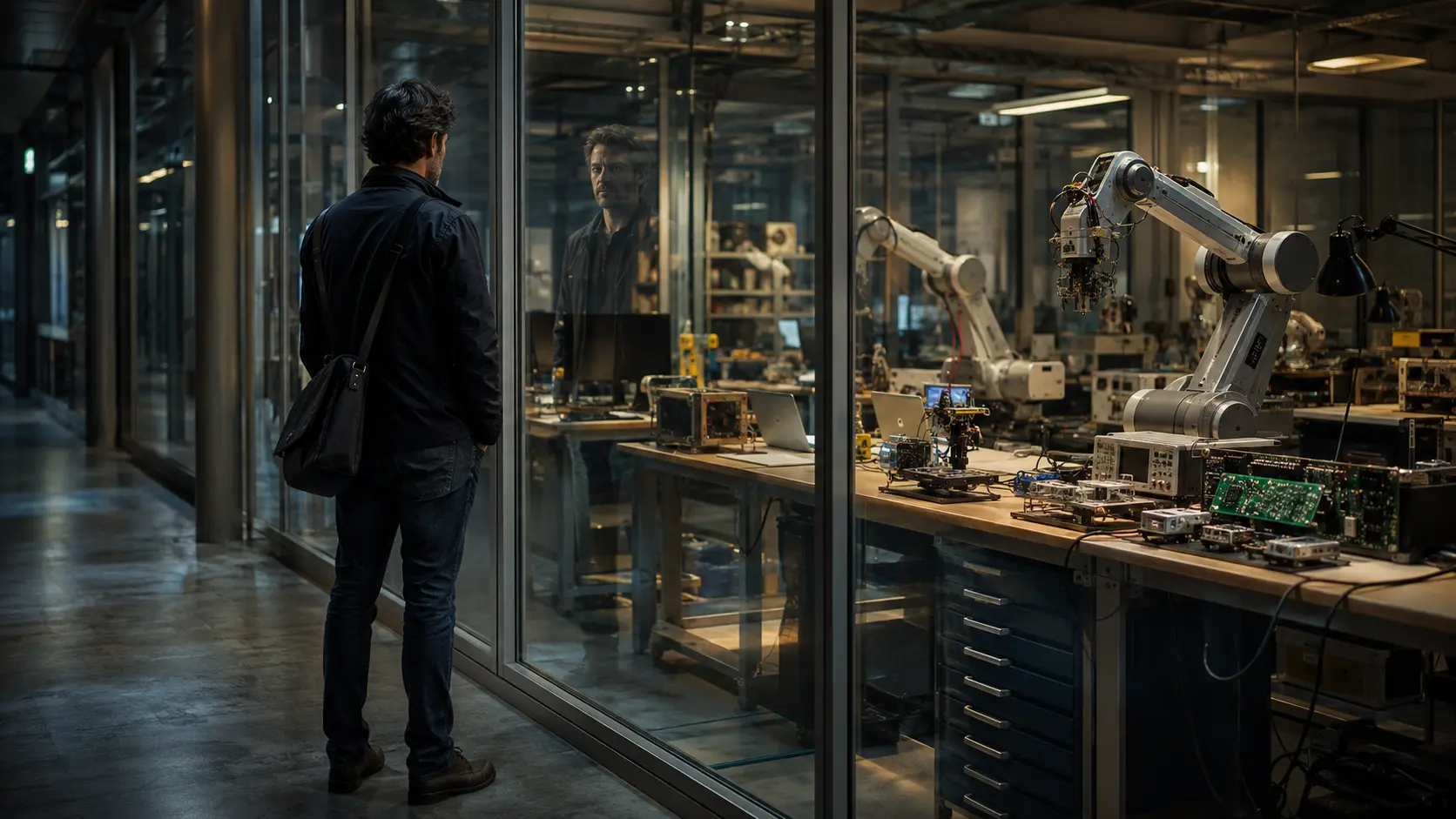
It was not a random fantasy after a bad day at work. Returning to electronics and physical systems had always remained somewhere in the background. I wanted to recover the knowledge I had lost over time and work again on things that connected software to the physical world.
But once I calculated the cost of that decision, everything became much more complicated.
It would require a great deal of time, giving up part of my income and effectively taking several steps backwards at a point when I already had a family and a stable life. The more successful I became in software, the more expensive it was to try another direction.
There is a strange paradox in that. A good career is supposed to give you freedom, and it does. But it also creates a new cost of leaving. You gain experience, reputation, income and a clear place in the profession. Starting something else means risking not an empty space, but all of that accumulated capital.
I gave up the idea of returning to university and tried to recover the missing knowledge on my own.
It was difficult. Even with my meticulous approach, you cannot simply open an old textbook and continue from the point where you stopped many years ago. Knowledge decays unevenly. Some things return immediately. Some feel familiar. Others have to be rebuilt from the foundations.
The main difficulty was not only technical. Adult life rarely leaves a large empty space where you can quietly fit a new profession.
When Everything Stopped
In 2019–2020, COVID arrived, and depression arrived with it.
It turned much of my life upside down. Things that had once seemed important and stable stopped working. I was forced to reconsider not only my career, but also the way I related to myself and my own expectations.
For a long time, I had lived with the feeling that I constantly needed to keep up, grow and prove myself. It was as if an imaginary version of me existed somewhere ahead and I had to reach him: more successful, more productive, more correct.
Depression did not give me a new goal. It did something else. It stripped the old goals of their automatic authority.
I began to accept that I am who I am. I do not have to reach for the stars or break myself to satisfy the expectations of people who, if I am honest, mostly do not care about me.
That was the point when I finally put myself at the beginning of the list, rather than after work, obligations and other people's ideas of success.
Before that, I often asked myself who I needed to become next.
Now the question was different: how did I want to live?
Progress Beyond a Career
Around that time, I finally found a hobby that genuinely captured me.
It began with 3D printing. Then came designing my own parts, small embedded projects built from existing boards, experiments and woodworking.
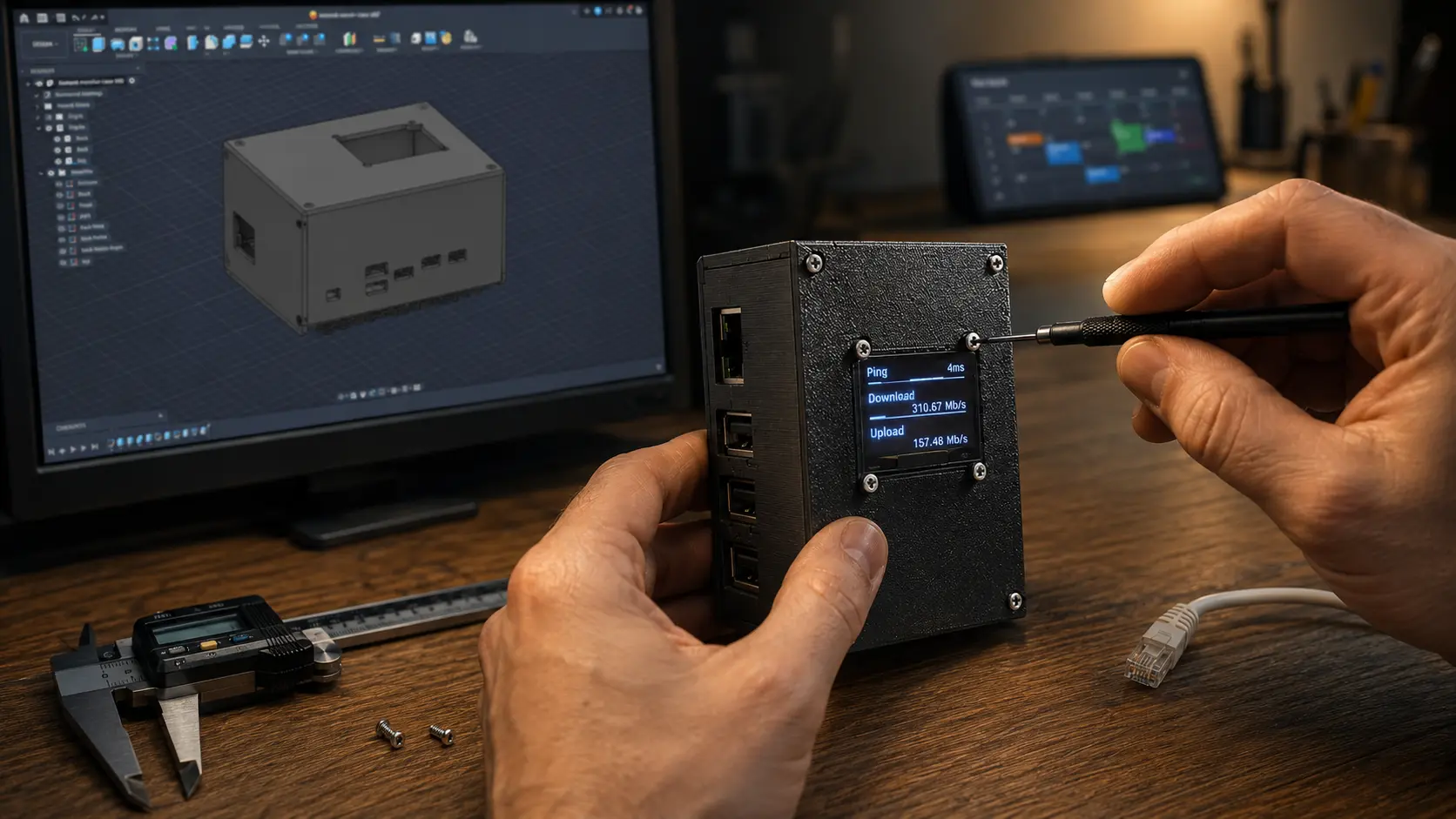
At first glance, these are different activities. In practice, they returned the same thing to me: the ability to create a physical result and see the whole system.
In software work, the result often remains abstract. You improve an architecture, correct the behaviour of a system, reduce execution time or make a process more reliable. All of that matters, but you cannot always put the result on a table and touch it.
A printed part or a wooden construction is different. An idea passes through measurements, a model, a material, mistakes and several iterations before becoming an object. If something does not fit, you cannot hide it behind a good presentation. The hole is either in the right place or it is not.
That directness clears my head.
Gradually, I understood that I no longer had to choose between software and engineering in the same way I had in 2007. At the time, circumstances demanded one primary path. Today, I can combine the experience I have accumulated with what I once left behind.
I do not need to quit my job, return to university and restart my career in order to design devices, explore electronics or build small systems again. I can do it at my own pace, without turning every interest into another professional plan.
Perhaps that was what I had been missing for years. Not another job, but a space where progress was not measured by a title.
The Career Was Not a Mistake
Today, I do not see software development as a compromise that took my real profession away from me.
It became my profession. It taught me to solve difficult problems, gave me financial stability and allowed me to complete one of the longest plans of my life. It is the reason my family and I are living where we are today.
I do not know what my life would have looked like if I had joined an engineering design bureau in 2007. Perhaps I would have become an excellent electronics engineer. Perhaps I would have moved into software a few years later anyway. Perhaps I would never have been able to leave. Any certainty here would be fiction.
Regret exists, but it does not prove the choice was wrong. It only reminds me of the part of myself that had no room for a long time.
The real mistake would be deciding that a choice made in my early twenties had to define the boundaries of the rest of my life.
It took me years to stop waiting for my career to provide the next answer. Work can be interesting, well paid and well suited to the way I think. But it does not have to be the only source of development, meaning and movement.
The past few years, and now tools built around AI, have given me more confidence in one simple idea: I can assemble a life that suits me. Not through one enormous decision, but through many small experiments. I can print something, design something, return to an old subject, learn a new tool, build a device that only I need, or simply spend an evening in the workshop without trying to turn it into a career investment.
My career did exactly what I needed.
Then I needed something else.