
Keepsake, Memories That Stay
A search for one missing photograph turned into a NAS, a photo archive, and eventually Keepsake. Years later, the question that started it all finally stopped mattering: where is that photo stored?
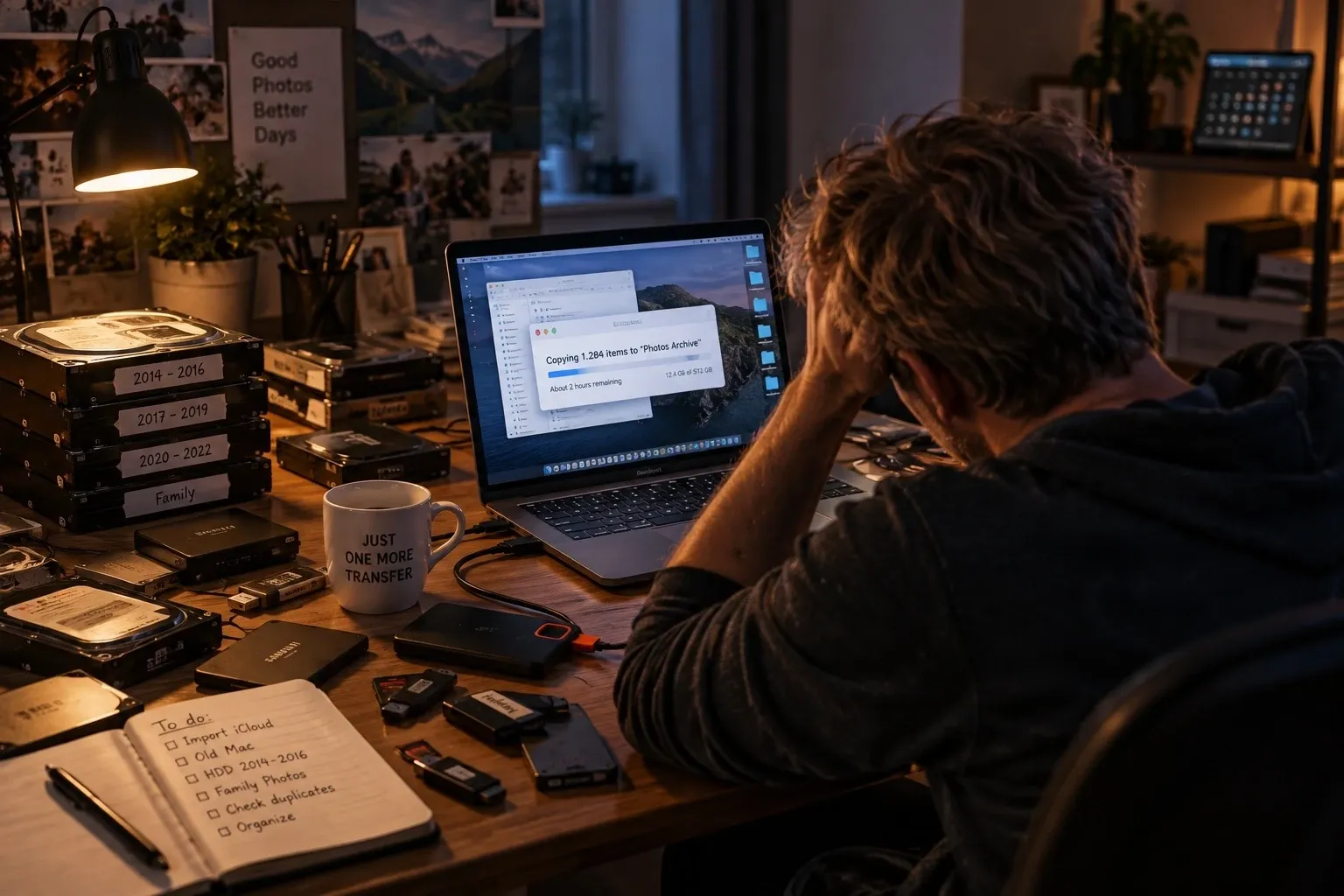
A few years ago, I was looking for one photograph. There was nothing special about the problem from a technical point of view. It was simply a photo I knew existed, but I had absolutely no idea where it was. My iCloud? My wife's iCloud? An old laptop? An external drive? One of the USB sticks sitting in a drawer somewhere?
That search eventually became the story One Photo Changed Everything. Looking back, I think I chose that title more accurately than I realized at the time. I eventually found the photo. But while looking for it, I discovered something much more uncomfortable.
Over the years, we had accumulated tens of thousands of photos and videos. They lived on phones, in clouds, on old computers, external drives, USB sticks and in folders I had long forgotten about. We hadn't lost our photos. We had slowly lost the ability to use them. That started a much longer journey.
At some point, a NAS entered the story. First as an idea, then as another project of its own. I wrote about the beginning of that journey in I Started Looking for a NAS. The NAS solved an important part of the problem. For the first time, I had a place I trusted. A place where I could collect the family archive and stop feeling that years of memories depended on some old drive surviving another year. But it also exposed another problem. Having all your files in one place and having one photo library are not the same thing.
A NAS is very good at answering Where are the files stored? It is much worse at answering the far more human question: Where are our photos? New photos were still appearing in my iCloud and my wife's iCloud. Old archives were still scattered around. There were duplicates. There were folders I wasn't sure I had already copied. There were drives I needed to connect just to find out what was on them. And, somewhat ironically, the original problem had never really disappeared. To find a photo, I still had to think about where I should look for it. I didn't want to think about that anymore.
This is roughly where Keepsake appeared. Not as some grand new project. Almost the opposite. I wanted to stop dealing with photographs as files. I wanted a system that knew where a photo came from. Something that could collect photos from different sources, keep track of what had already been imported, avoid filling the archive with duplicates, preserve the original files and metadata, and ultimately give me one library instead of another collection of folders.
At first, it looked fairly modest. Then we connected iCloud. And I watched the photos begin to arrive in one place. Mine. My wife's. Old ones. New ones. Images that had previously existed in completely separate worlds were slowly becoming one library. That was probably the moment when I first understood that it was actually working. Not technically. Not because an import job completed successfully or because some database row looked correct. Because I could simply open one place and look at our photos.
No borrowing my wife's phone. No connecting an old disk. No trying to remember a folder structure I invented five years ago. Just find the photograph.
And somewhere around that point, a slightly funny thought caught up with me. Years ago, all of this started because I couldn't find one photograph. Since then there had been a NAS, old drives, migrations, backups, scripts, experiments, temporary solutions and more time spent moving files around than I would like to admit. Now the question where is this photograph stored? had simply stopped mattering. Not because I finally remembered where everything was. Because I no longer needed to know. That is when the loop finally felt closed.
The photographs are still files, of course. They still live on disks. They still need backups, checksums, storage and all the boring infrastructure underneath. But that infrastructure is no longer the way we experience them. They are photographs again. Memories. Something we can actually look at together.
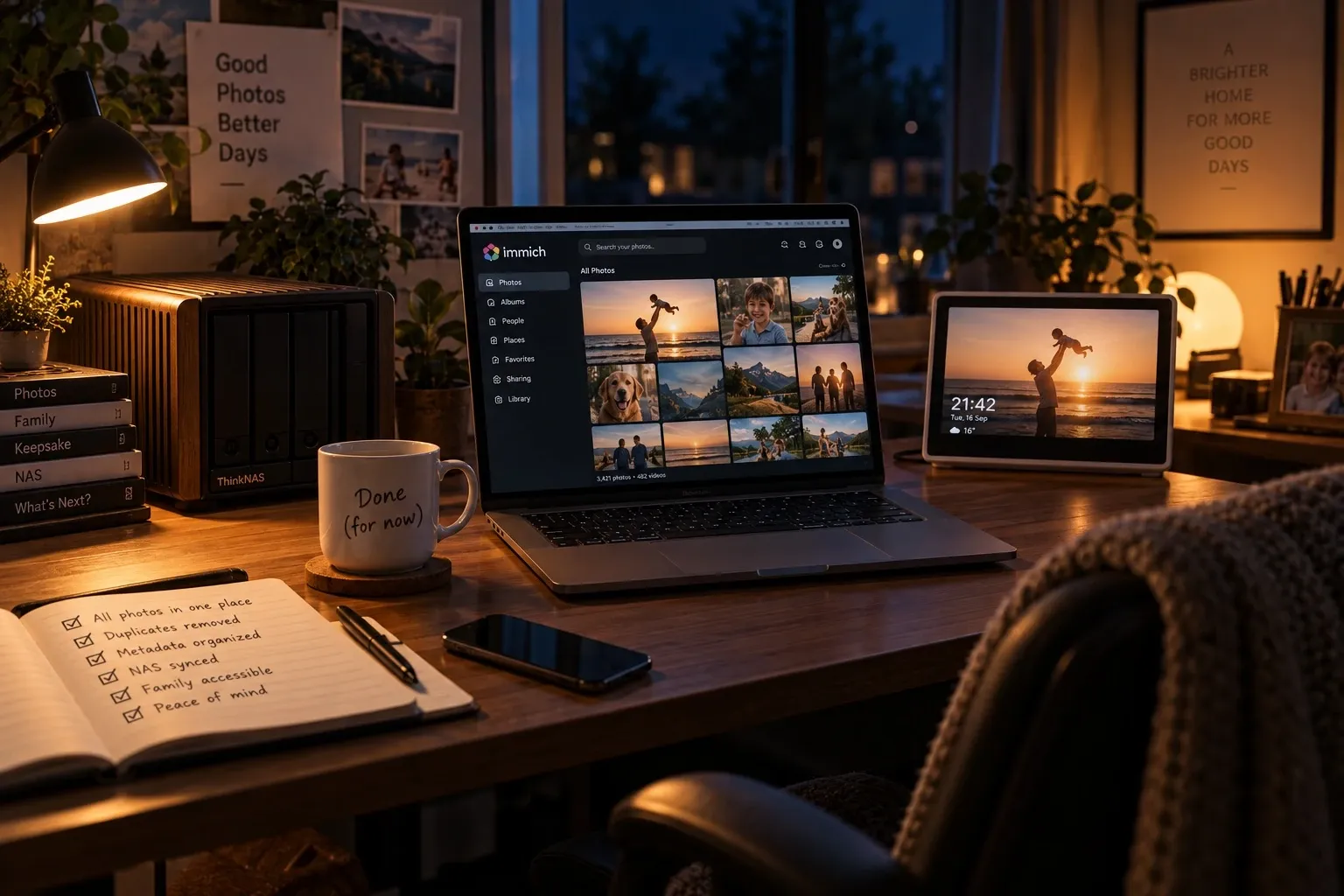
For a while, I thought that was the end of the project. It wasn't. Once all those photos stopped being a collection of files scattered across different places and became one accessible library, I realized I had accidentally built something much more useful than a photo archive. But that is another story.