
From a Family Calendar to... Whatever This Is
A paper family calendar worked perfectly. I just wanted to make it a little more alive. Somehow that turned into Raspberry Pis, QR codes, infrastructure, and a project I'm still not entirely sure how to describe.
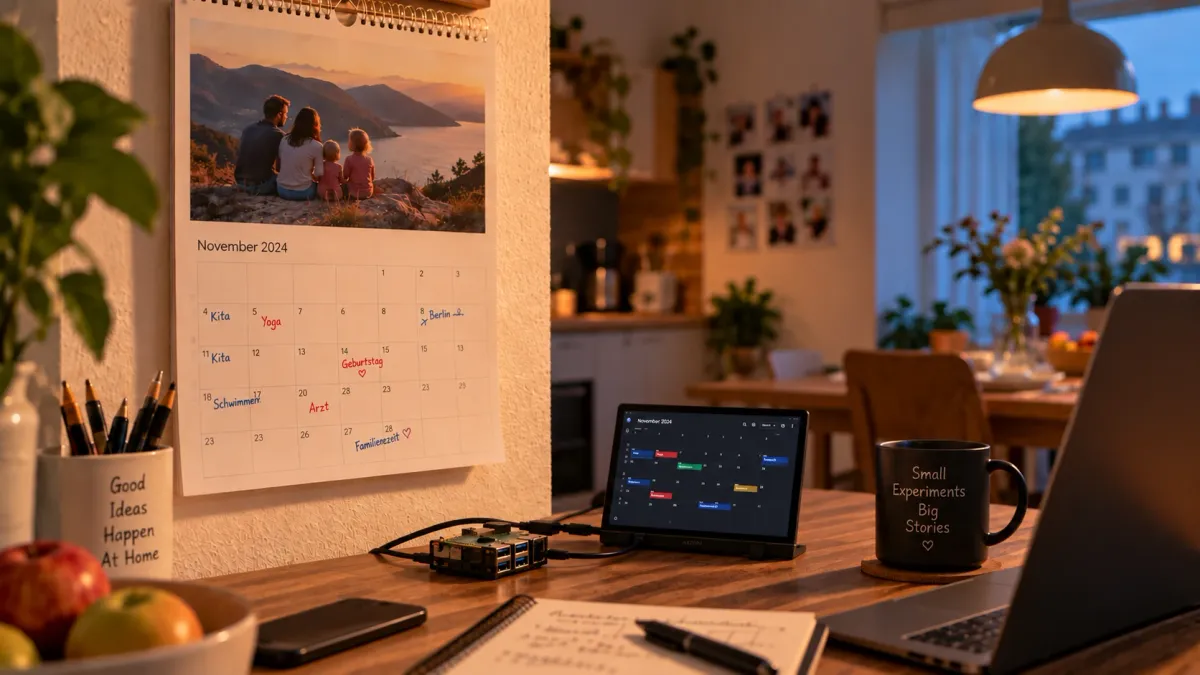
Every year, my wife used to make a photo calendar for our family. We would go through photos from the previous year, pick our favorites, send everything to print, and hang the calendar on the wall.
It was part schedule, part photo album. Doctor appointments, things for the kids, plans, little notes. But the photos were always the important part. Sometimes you would walk past, recognize a moment, remember where we were, and smile. Every now and then, that was enough to make you pull out your phone and start scrolling through photos from that day again.
The calendar was completely analog. And honestly, it worked perfectly.
The problem wasn't the calendar. It was making a new one every year: finding the photos, choosing them, uploading everything, putting it together, ordering it. None of this was particularly difficult. It just took time.
And like many things that are important but never urgent, it kept getting postponed. Some years, our new calendar didn't appear until almost halfway through the year.
Eventually, my wife said:
I don't have time for this anymore. If you want one, make it yourself. Or maybe we just don't make one this year.
And instead of doing the reasonable thing and making the calendar myself, my inner engineer kicked in.
What if we didn't have to make it every year?
I liked the paper calendar. I wasn't trying to fix something that was broken. I just wanted to make it a little more alive.
The photos didn't have to stay frozen for twelve months. They could change. There could be collages. Random memories could appear without us choosing them months in advance. Maybe eventually we wouldn't have to choose anything at all.
Connect a photo library, iCloud, a NAS, whatever, and let it find those moments itself.
At the same time, our actual calendars had already scattered everywhere: mine, my wife's, Google Calendar, things from school, holidays, waste collection living in yet another app. All the information existed. It just didn't exist in one place that belonged to the family.
And strangely enough, we already had the perfect place for it: the wall where the paper calendar had always been.
At that point, I had no product idea. No architecture. No roadmap. I had a Raspberry Pi and a screen.
So I asked Codex to throw together something roughly resembling Google Calendar. I added some space for photos, hardcoded a few things, and just wanted to see what would happen.
About half an hour later, there was something on the screen. It was rough. Half of it was hardcoded. Calling it an application would have been generous.
But I looked at it and thought:
Oh God. It actually works.
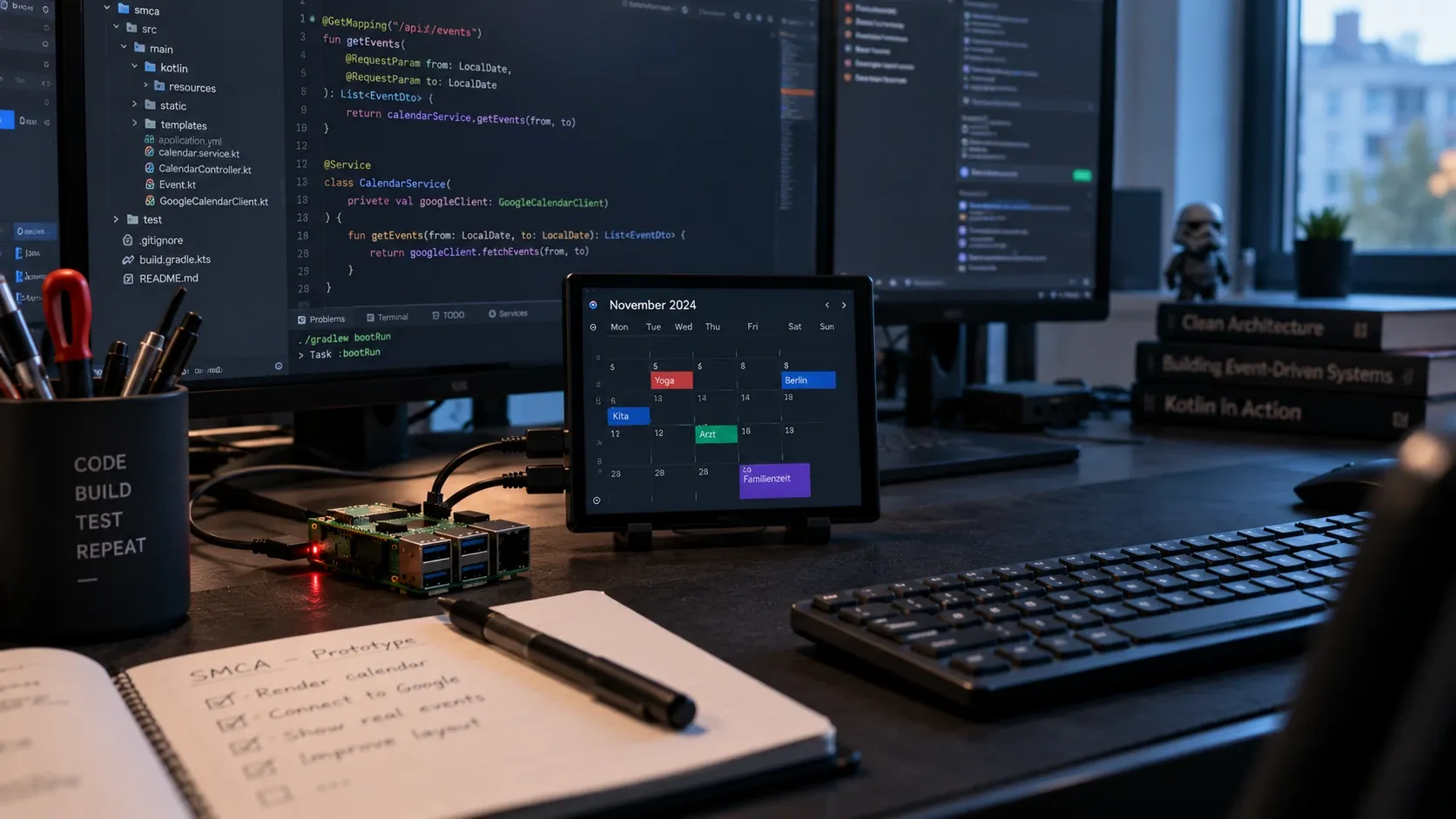
Half an hour earlier, this had been one of those stupid little "what if?" ideas. Now there was a screen on my desk showing it.
I showed it to my wife. She looked at the screen, looked at me, and basically said:
Okay. Have fun.
I chose to interpret that as approval.
For a brief moment, I genuinely thought I was almost done: Raspberry Pi, screen, calendar, photos. Put it on the wall. Done.
That feeling didn't last very long.
How do you log into something hanging on a wall without a keyboard? Okay. QR code. But where does the QR code come from? How does it get associated with the device? What if I give one of these devices to a friend? What happens when an update breaks something? How do I even know that something broke?
At some point I caught myself spending evenings building things that nobody looking at the calendar would ever see. And I remember thinking:
Wait. What exactly am I building now?
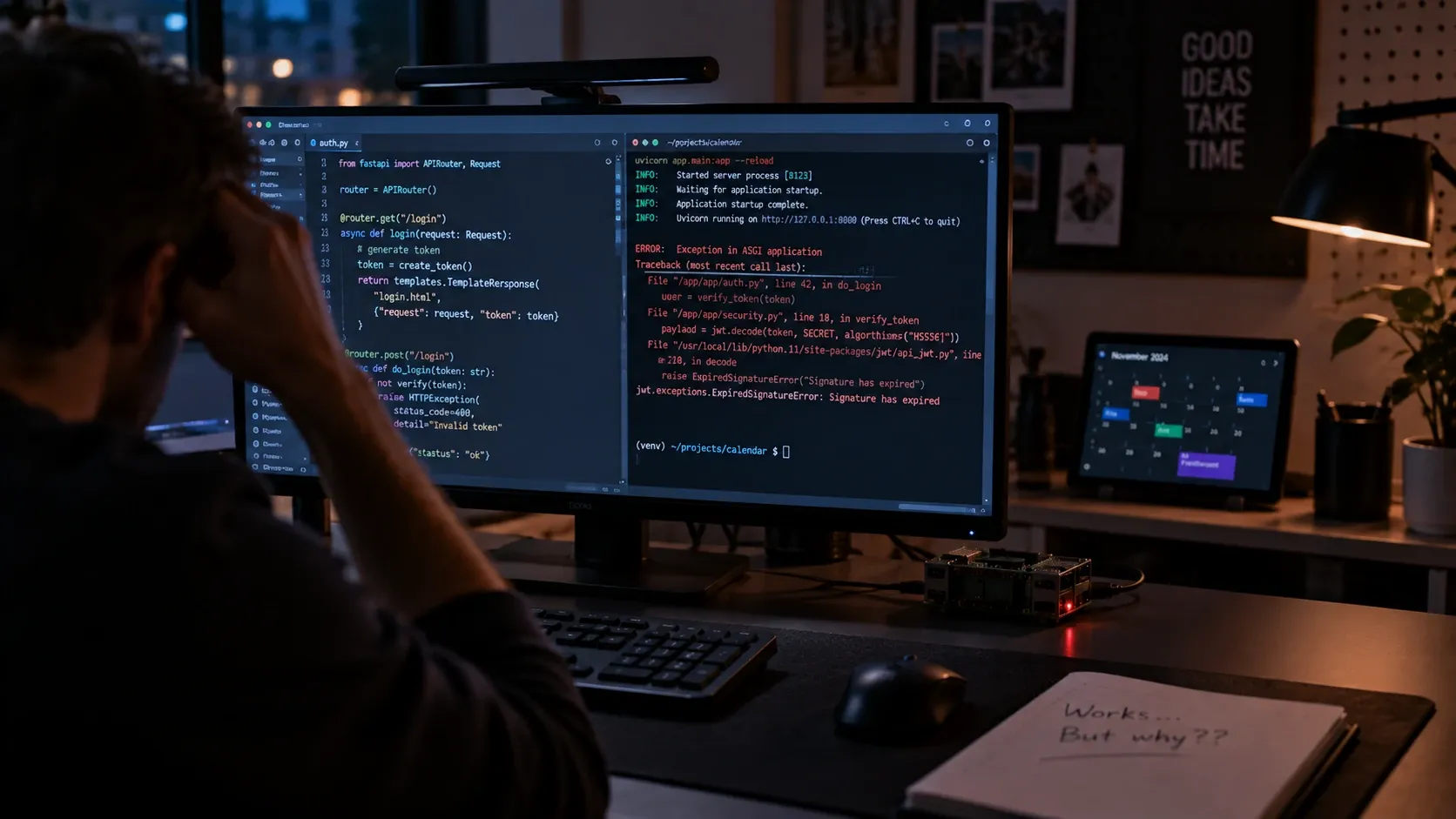
I just wanted photos on a wall.
There were evenings when that was genuinely frustrating. But there were others when I suddenly realized I had spent four hours digging into something I had understood theoretically for years but had never actually built myself. And strangely, I liked that too.
I was learning things simply because the project kept putting new problems in front of me.
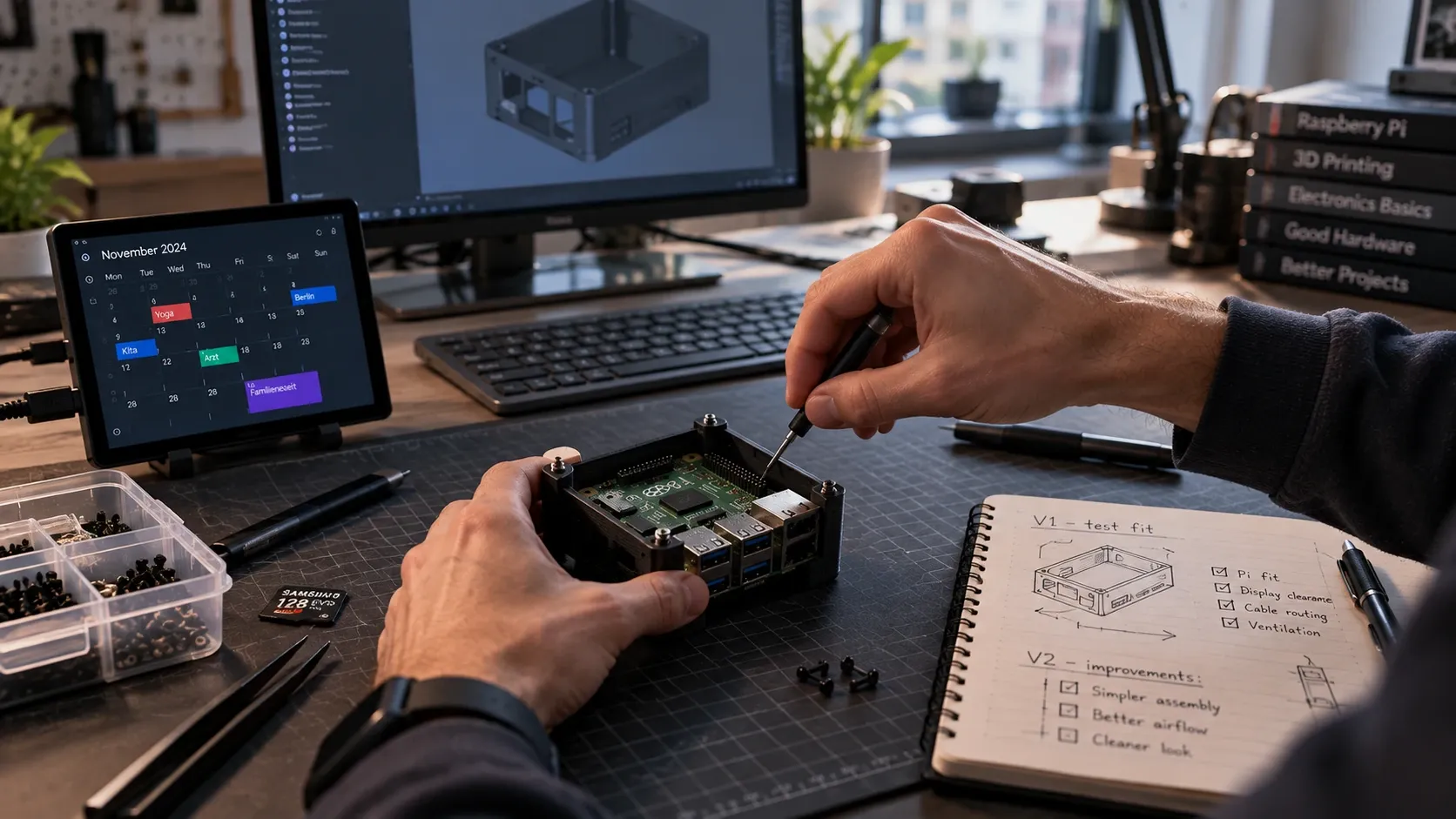
Sometimes I wasn't entirely sure why I was still doing it. I just kept finding another thing I wanted to understand.
Somewhere along the way, even the device itself stopped being obvious. I started with the idea of building a physical thing—my own device, hanging on the wall. I still like that idea.
But does it actually need its own hardware? Maybe a tablet is enough. Maybe a phone can be part of it too. Maybe the device is just one possible form of whatever this thing is becoming.
And that's probably the funny part. I'm still not entirely sure what it is becoming.
Maybe I overcomplicated the whole thing. Probably.
But the thing that started all of this is still there: a calendar on the wall. Photos that don't disappear somewhere near the bottom of a library containing twenty thousand other photos. Every once in a while, one of them appears when you weren't looking for it.
You walk past. You recognize the moment. And for a few seconds, you're there again.
I think that's still the part I like the most.