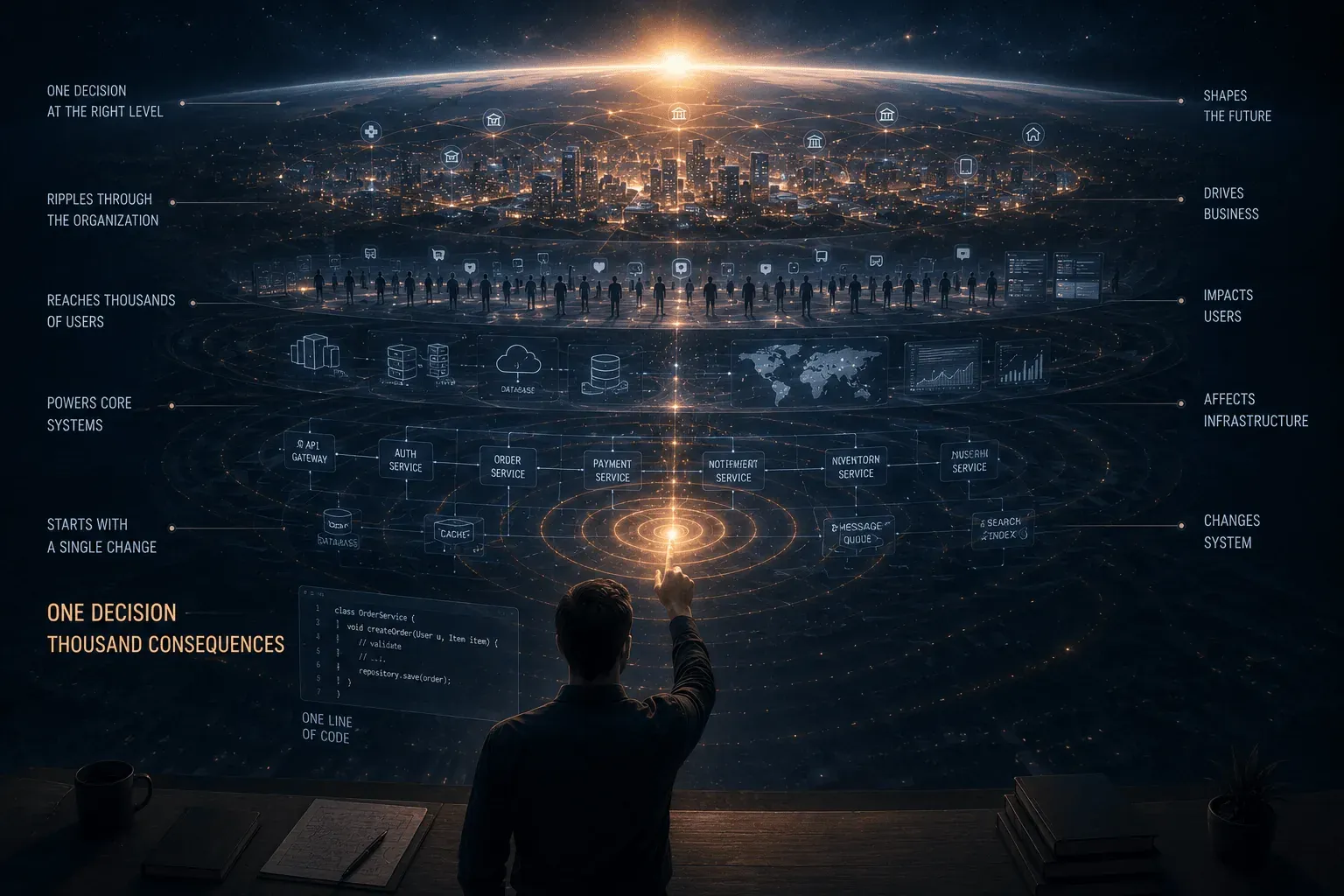
I Stopped Being a Developer. AI Forced Me to Become an Engineer.
AI did not simply make me faster at writing code. It changed the level at which I work: from implementation to decisions, from isolated tasks to systems, and from developer to engineer.
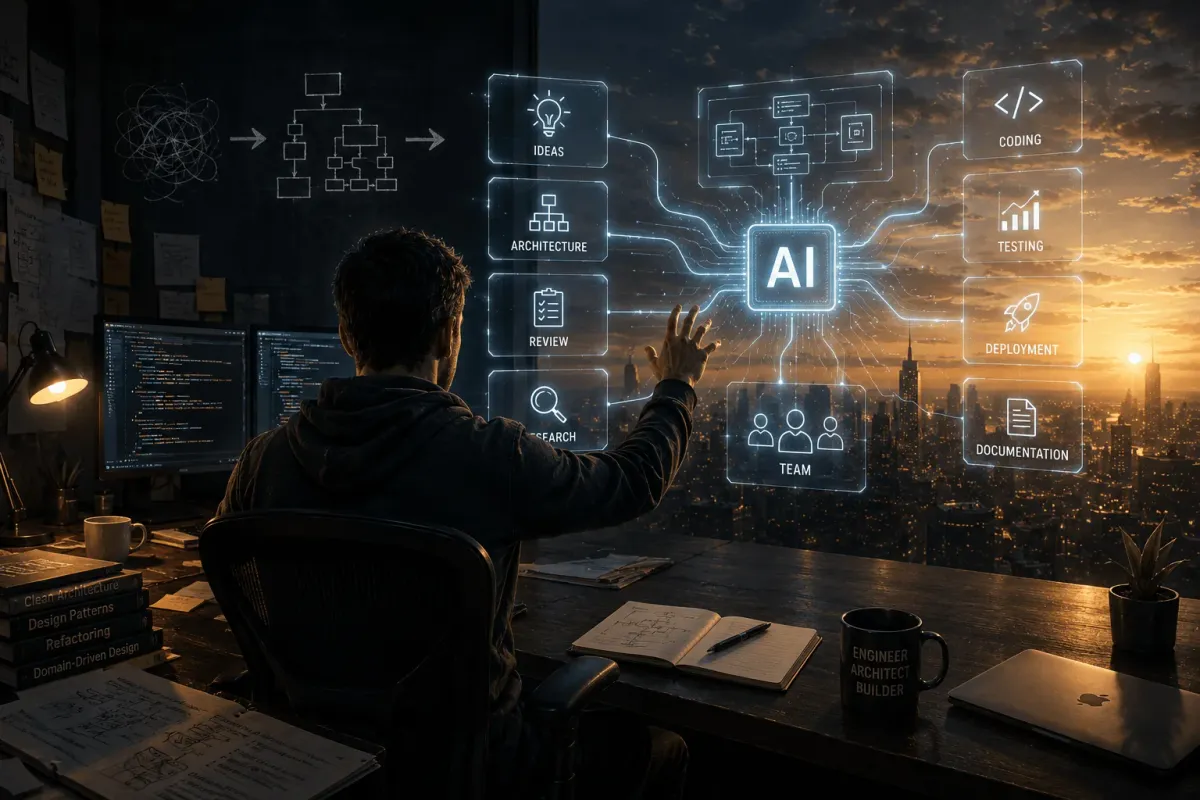
Not long ago, engineering productivity was measured in familiar ways: how many tasks someone completed, how quickly they wrote code, and how deeply they understood a language, framework, database, or cloud platform. For decades, the industry rewarded exactly that. We learned to write cleaner code, understand systems at a lower level, master new tools, and become more valuable within a defined technical domain.
Then the cost of producing code started collapsing.
That shift turned out to be more important than any new programming language or framework. It did not remove the need for engineers, but it changed what engineering work actually is.
Code Was Never the Real Bottleneck
When modern AI tools first became useful, most developers used them predictably: generate a function, fix an error, write a unit test, explain an unfamiliar API, or refactor a class. This accelerated implementation, but it also exposed something we had ignored for years: writing code was rarely the main constraint in serious product development.
Most projects spend far more time clarifying requirements, challenging assumptions, choosing trade-offs, designing architecture, reviewing decisions, testing behavior, securing systems, deploying safely, and adapting to changing product needs. Code is a consequence of those decisions. We simply treated it as the center of the profession because it consumed so much of our time.
At some point, I noticed that I was opening my IDE less often. I was spending more time discussing a problem before implementing it. I used AI to challenge architectural choices, expose weak assumptions, defend opposing positions, search for failure modes, compare alternatives, and find questions I had not considered.
Sometimes an entire evening passed without a single line of code being written, and it was still one of the most productive evenings of the week.
That was the moment I understood the real shift: I was no longer primarily producing code. I was making decisions.

From Executor to Orchestrator
The traditional developer works directly on a task. The modern engineer increasingly designs the environment in which many tasks can be completed, reviewed, challenged, and integrated in parallel.
One model can explore an architecture. Another can attack it from a security perspective. A third can generate an implementation. A fourth can review the implementation against the original constraints. Other tools can help with design, documentation, testing, research, deployment, and product messaging.
The engineer's value no longer comes from outperforming every tool at every activity. It comes from defining the problem correctly, decomposing it intelligently, assigning the right work, preserving context, evaluating results, and deciding what should survive.
AI generates options well. It does not own the consequences of choosing one.
That responsibility remains human.
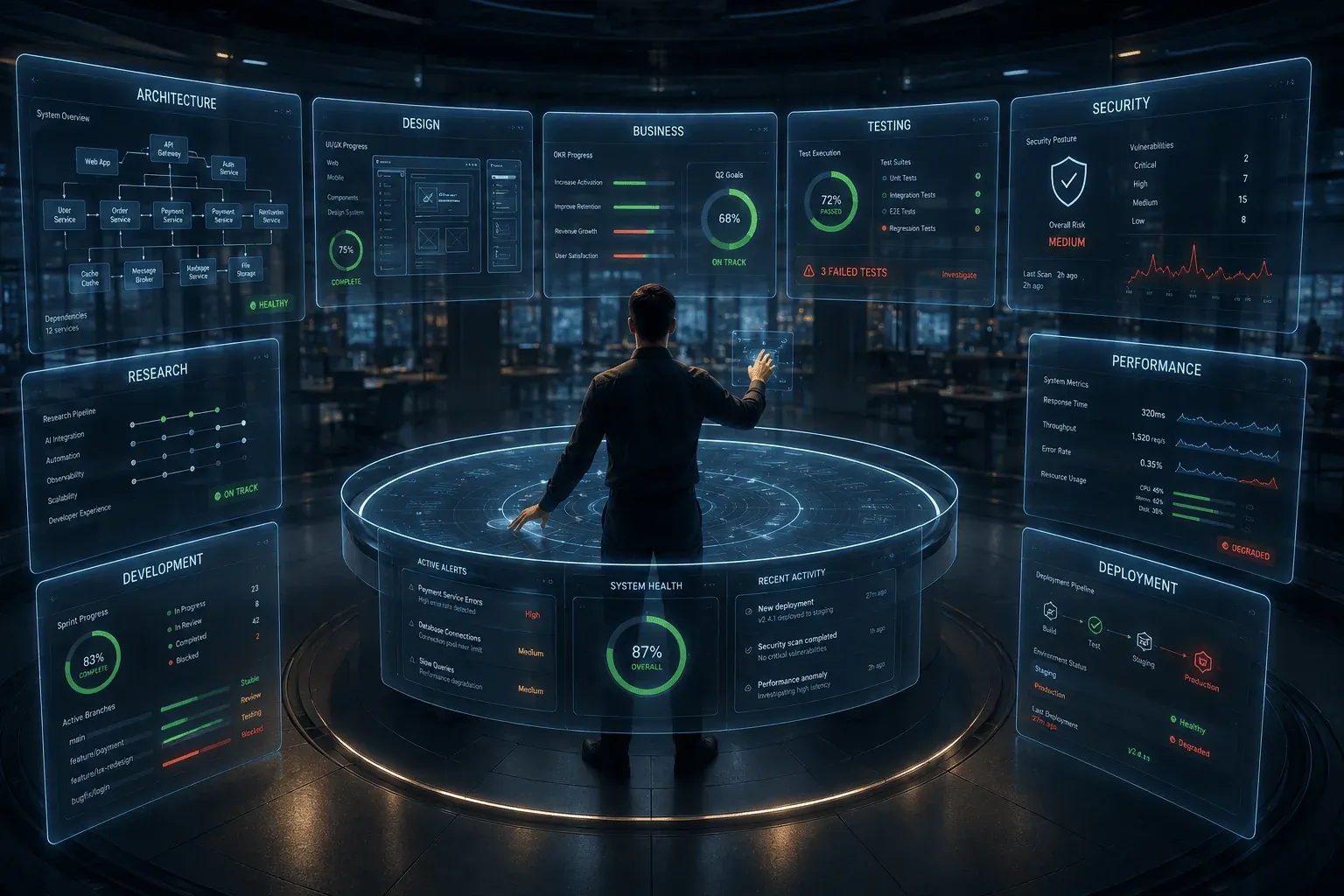
The Boundaries Between Disciplines Are Disappearing
For a long time, I thought of myself mainly as a backend engineer. My responsibility ended roughly where the work of another specialist began. Design, UX, marketing, sales, customer research, legal questions, and product strategy belonged to neighboring domains.
That model works inside a large organization with specialized teams. It breaks down when you build your own product.
A product does not care where one discipline ends and another begins. A technical decision changes the user experience. A design choice changes the architecture. A pricing decision changes infrastructure needs. A security compromise can destroy trust. A poor onboarding flow can make excellent engineering irrelevant.
AI did not turn me into a professional designer, marketer, lawyer, or salesperson. It did something more practical: it reduced the cost of entering those domains far enough that I could participate.
I can build a first design, challenge it, generate alternatives, compare them, and learn through iteration. I can test positioning, rewrite a landing page, inspect an unfamiliar legal concept, review an analytics model, or prepare a sales narrative without waiting until I have mastered an entire field.
The first attempt became cheap. Iteration became cheap. Learning moved directly into the act of building.
That changed my mindset more than code generation ever did.
The More Powerful the Tools, the More Dangerous Blind Trust Becomes
AI makes convincing mistakes. It invents APIs, misunderstands context, overlooks edge cases, proposes insecure patterns, and confidently defends designs that will fail under real conditions. A weak engineer can now produce a bad system faster than ever.
This is why prompt writing is not the defining skill of the AI era. Critical thinking is.
The engineer must know when to stop, question the answer, demand evidence, compare alternatives, test assumptions, and recognize when a plausible solution is still wrong. AI can suggest ten architectures, twenty designs, and fifty implementation strategies. It cannot reliably decide which compromise fits a specific product, team, market, and timeline.
Knowledge used to be scarce. Now options are abundant. Judgment is scarce.
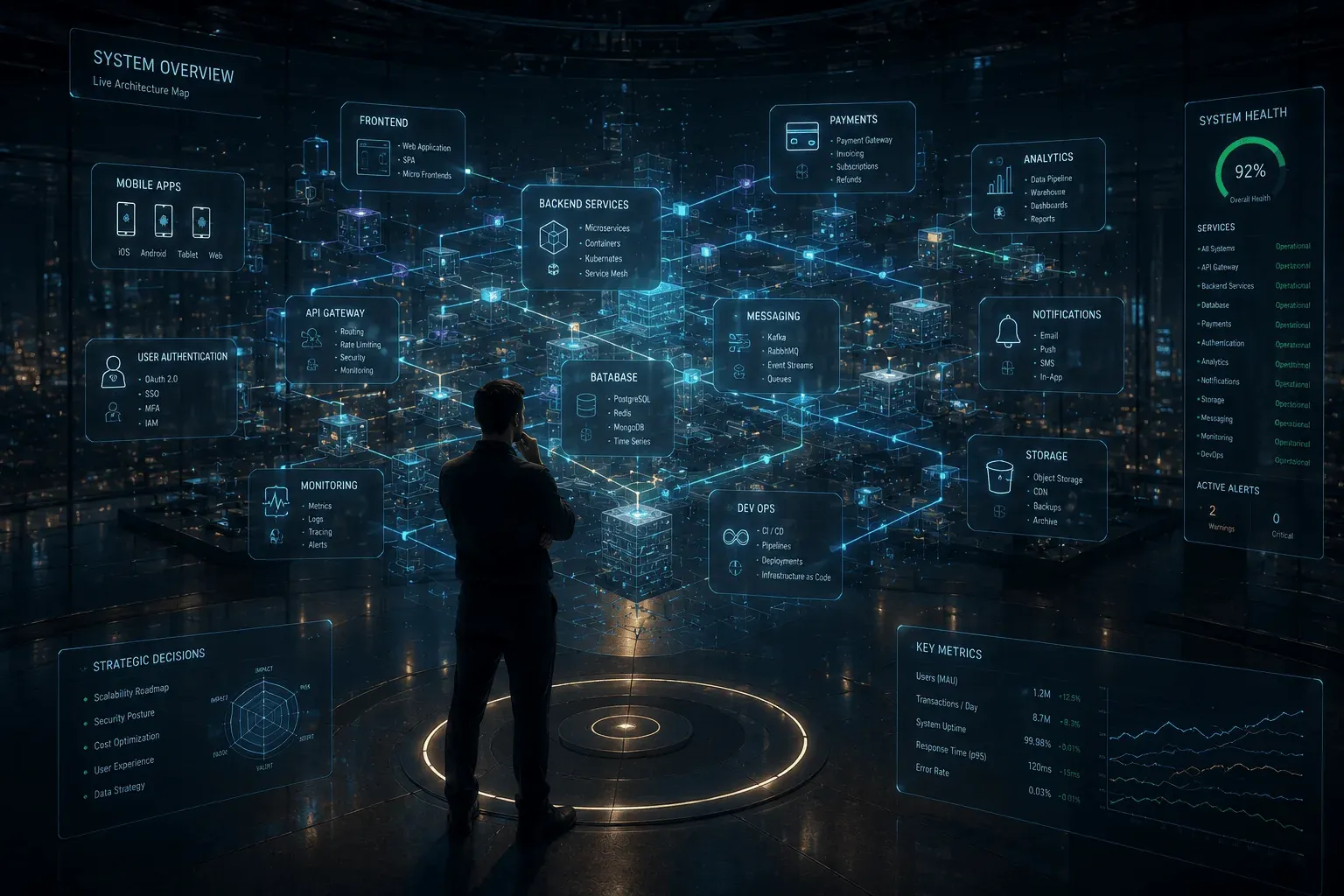
Engineering Has Moved Up the Abstraction Stack
The deepest change is not automation. It is the level at which engineers are expected to think.
We are moving from files to services, from services to systems, from systems to products, and from products to their long-term effects on users and businesses. The local implementation still matters, but it is no longer the whole job.
A good engineer must understand how one decision affects performance, security, maintainability, user experience, infrastructure cost, operational risk, and future product development. The value is shifting from producing components to understanding their interactions.
That is why I no longer measure productivity by lines of code. I look at different outcomes:
- Did we validate the right hypothesis?
- Did we reject a bad idea before it became expensive?
- Did we find the hidden risk early?
- Did we design something that can survive the next stage of growth?
- Did we create a process that improves future decisions instead of merely finishing today's task?
A day can be highly productive even when very little code is written.
Building Products Changed Me More Than Using AI
The biggest personal change was not that I became faster at my existing job. It was that I started building products I had postponed for years.
Previously, every idea immediately expanded into a list of dependencies: backend, frontend, infrastructure, design, testing, documentation, analytics, landing pages, distribution, support, and sales. The cost of experimentation was so high that many ideas remained ideas.
AI did not remove the work, but it reduced the cost of exploring it. I could start before I felt fully prepared, learn while building, identify where I was weak, and improve through real product decisions rather than abstract study.
That process exposed gaps in my thinking. I had to become better at architecture, system design, product strategy, UX, communication, positioning, sales, and prioritization. I stopped thinking like someone responsible for a component and started thinking like someone responsible for an outcome.
That is the point where I stopped identifying only as a developer.
The Profession Is Changing Whether We Like It or Not
The world is not waiting for engineers to become comfortable with this shift. AI tools will become faster, more specialized, more deeply integrated, and more capable of handling work that recently required significant manual effort.
The important question is no longer whether AI will write code better than humans. It probably will in many contexts.
The real question is this:
What should an engineer become when code is no longer the most expensive resource?
The answer is not another framework or another syntax. It is the development of what remains difficult to automate: critical thinking, systems thinking, judgment under uncertainty, the ability to connect technology with product and business, and the discipline to understand the consequences of a decision before those consequences become visible.
The profession is not disappearing. Its center of gravity is moving.
Engineers who only optimize implementation will compete with increasingly capable tools. Engineers who can define problems, challenge assumptions, orchestrate work, connect disciplines, and see the whole system will become more valuable.
AI did not take my profession away. It removed the parts that could be formalized and forced me to confront the parts that actually matter.
I still write code. I still care about architecture, performance, testing, and clean implementation. But code is no longer the center of my work.
The world changed, and I had to change with it.
I stopped thinking only about what I was building today. I started thinking about what my decisions would make possible tomorrow, what could fail a year from now, and how the system would evolve after the first release.
That is why I increasingly describe myself not as a developer, but as an engineer.
A developer writes the next piece of the system.
An engineer is responsible for what happens after it exists.