
I Didn't Need Another Project. I Needed to Finish One.
A photo made me question why I could consistently deliver complex projects at work while leaving a trail of unfinished ideas at home. The answer had little to do with discipline and everything to do with focus.
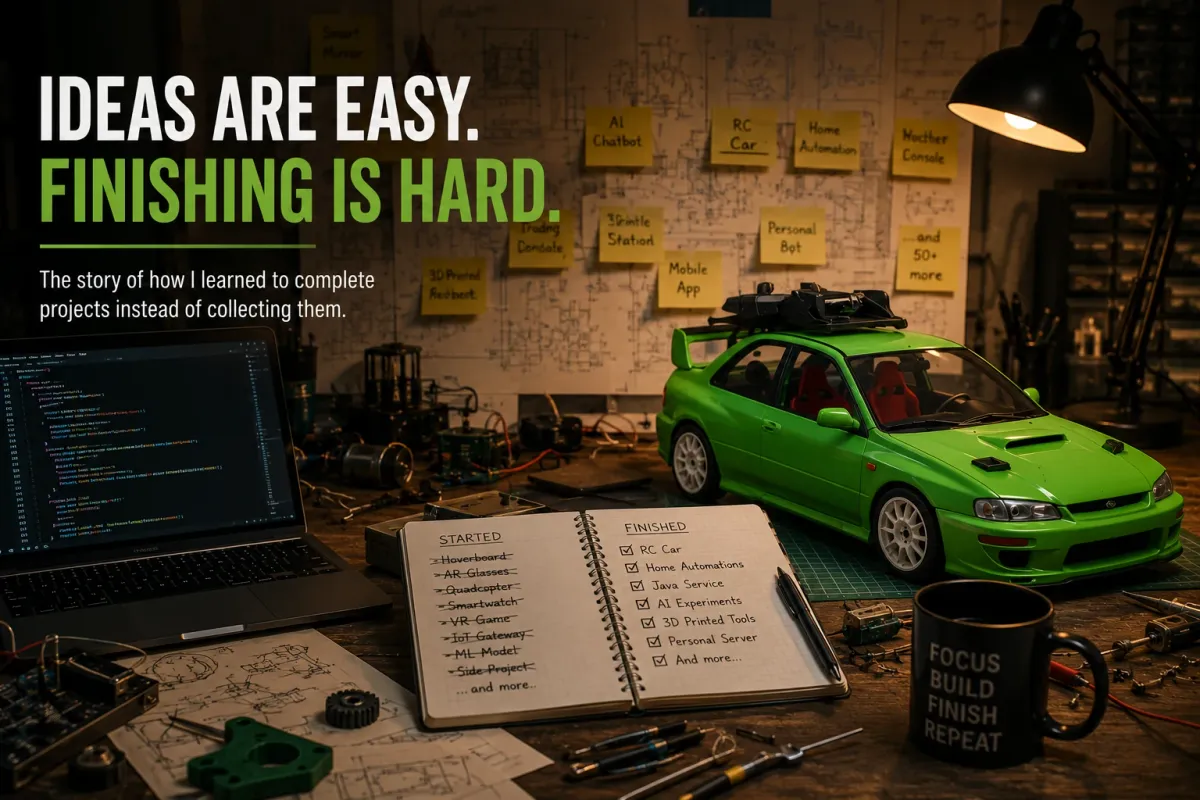
A few years ago, a single photo made me think about something I had been ignoring for a long time. I barely remember the photo itself now, but I remember the question it forced me to ask.
Why was I able to finish complex work projects, while constantly abandoning my own projects at home?
In my professional life, finishing work was never the main problem.
A new feature? We'll build it.
A complicated refactoring? We'll figure it out.
A new service? We'll design it, implement it, and ship it.
For years, I worked on large systems, solved complex problems, and regularly pushed things across the finish line.
But at home, everything looked completely different.
I always had new ideas. I wanted to build an RC car, learn a new programming language, try another technology, write my own service, automate something at home, or start yet another project that was definitely going to change everything.
Starting was easy. Finishing was almost impossible.
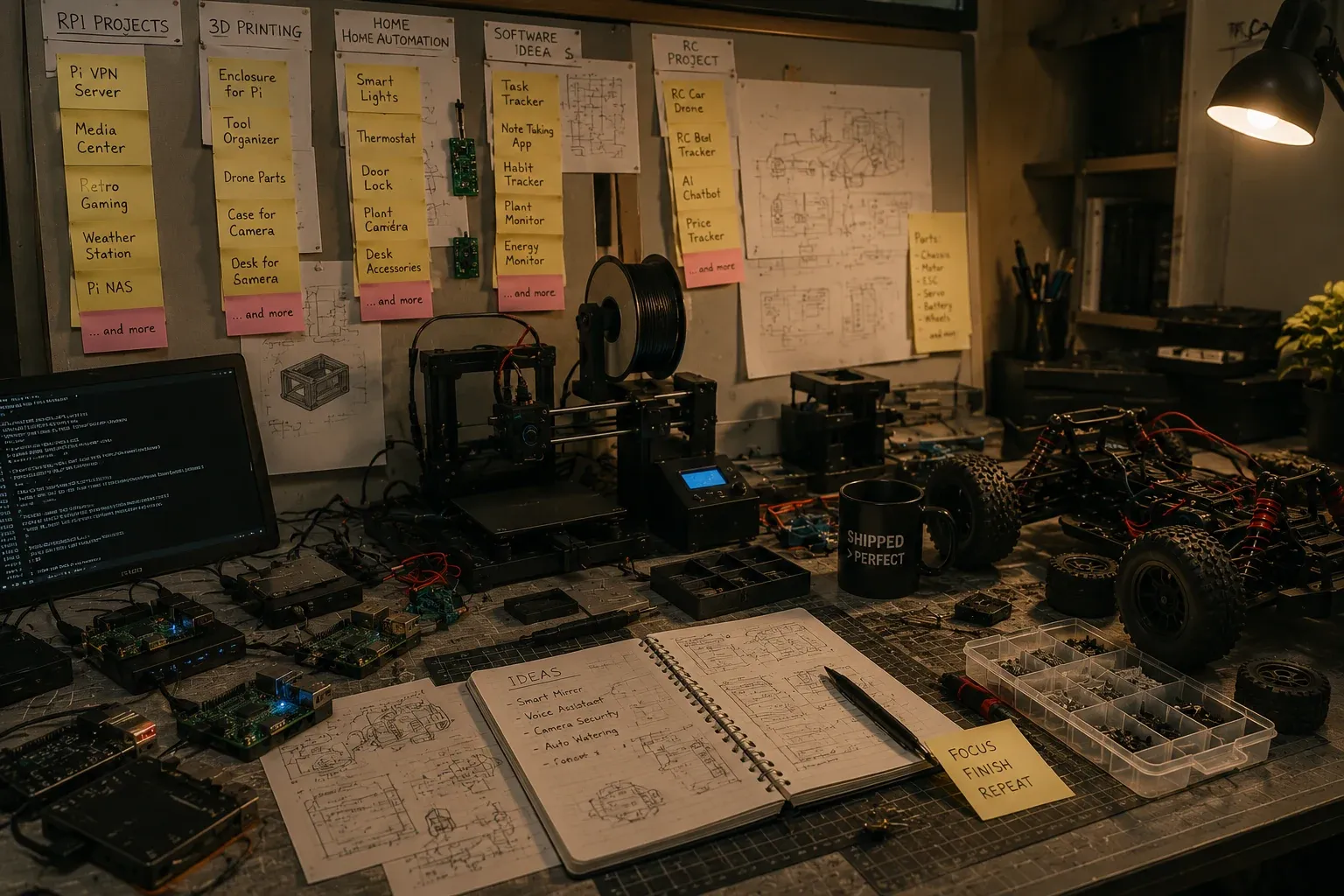
I wasn't lacking motivation. I was drowning in possibilities.
Over time, I built a real graveyard of projects around myself. Unfinished services. Half-built devices. Folders full of notes. Lists of ideas. The most uncomfortable part was that I did not understand why this was happening.
If I could finish complex work for other people, why couldn't I do the same for myself?
Instead of reading another book about productivity, I decided to run an experiment. I set a goal to finish fifteen projects. Not start them, not research them, not plan them. Finish them.
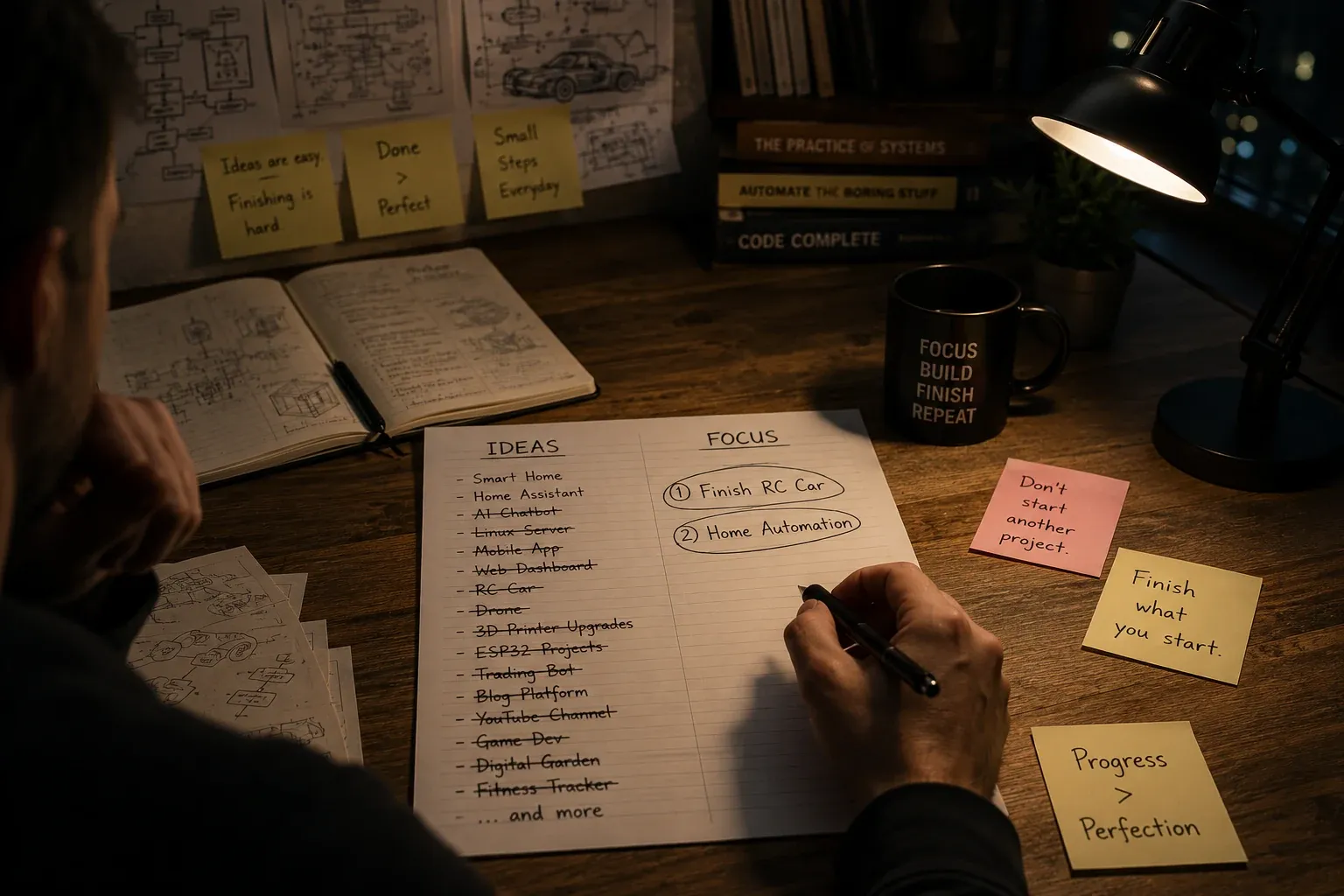
Progress started when I decided what not to build.
One of those projects was an RC car. Around that time, I discovered the work of Casadio RC. What inspired me was not only the models themselves, but the approach. Someone was taking ideas, turning them into real objects, publishing the models, improving the designs, and bringing them to a working state. Maybe that was the first time I realized that what attracted me was not only the project itself, but the ability to finish it.
To build my first model, I bought my first 3D printer. Every printed part became a small victory. I assembled the chassis, connected the electronics, configured the controls, and slowly watched a pile of separate parts turn into something real.
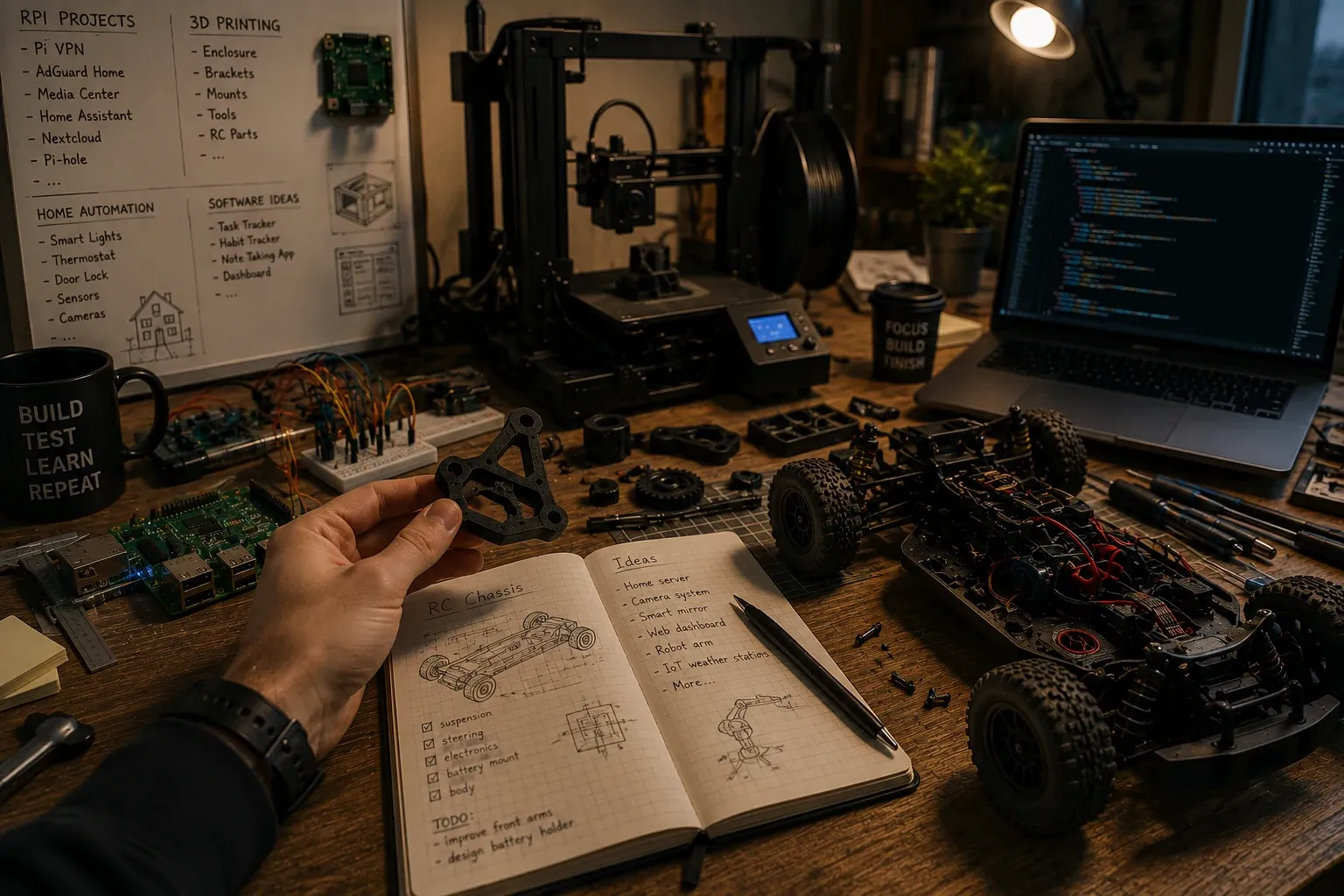
Small victories eventually become finished projects.
At some point, I even changed the control setup to use a transmitter style closer to quadcopter controls instead of a classic RC car controller. When everything finally worked, it gave me much more satisfaction than I expected. It was not really about the car. It was about finishing something that had started as just another idea.
That was when I understood something important. Most of my previous projects had been too large and too vague.
"Learn a new technology."
"Build my own product."
"Make the house smart."
Those are not projects. They are directions that can last for years.
They do not have a clear finish line. And when there is no finish line, the brain never gets the feeling of completion.
The RC model was different. Every step had a visible result. Print a part. Install a motor. Connect a receiver. Configure the controls. Test another hypothesis. Instead of one huge goal, I had a chain of small wins.
Later, other finished projects followed: small services, home automations, early experiments with AI. In the end, I did not reach my original target of fifteen. I finished around eight projects. But that was enough to change the way I looked at the problem.
I realized that the issue was not discipline.
It was focus.
Every new idea felt important. Every idea wanted attention immediately. But the more projects I opened at the same time, the fewer I actually finished.
Over time, I started to notice that moment. New ideas still appear almost every day. The difference is that, before, a new idea automatically became a new project. Now it first becomes a note.
I write it down. I evaluate it. I compare it with what I am already working on. Only then do I decide whether it deserves attention now.
Of course, I did not magically solve the problem. I still regularly catch myself wanting to drop the current project and jump into a new one. Curiosity, experimentation, and the desire to validate ideas quickly are still part of how I think. In many situations, they are strengths.
But now I at least understand the trap. I try to capture ideas, set priorities, and bring current work to a logical stopping point before grabbing the next thing. It does not always work, but it works much more often than before.
Since then, I have built three Casadio RC projects. But today I look at the first one differently. It reminds me less of a hobby and more of the moment when I started changing my relationship with unfinished projects.
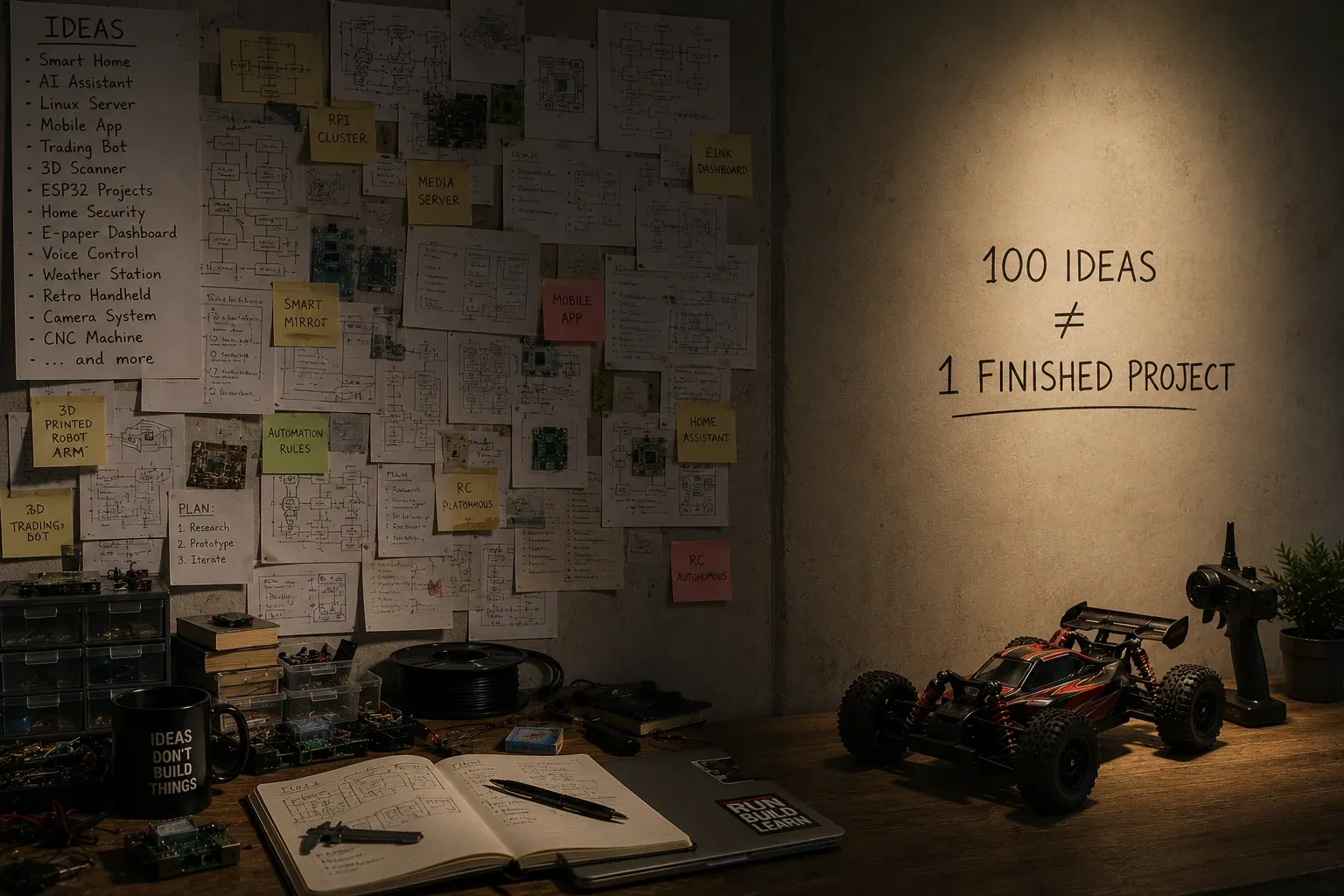
Ideas live in notebooks. Finished projects live in the real world.
Looking back, the most valuable result was not the eight finished projects.
The most valuable result was understanding one simple thing: ideas are worth nothing until they become real.
You can have a thousand projects in your notes. But one working thing that you created with your own hands and brought to completion is worth more.
Unfinished projects live only in your head.
Finished ones start changing reality.